Custom Home vs Production Home: Which Is Right for You?
Building a home is one of the biggest financial and emotional decisions you’ll ever make. One of the first—and most important—choices you’ll face is deciding between a custom home and a production home. While both options result in a brand-new house, the experience, cost, flexibility, and long-term satisfaction can differ significantly.
This guide breaks down custom home vs production home in clear, practical terms so you can determine which option best fits your lifestyle, budget, and long-term goals.
Understanding the Difference Between Custom and Production Homes
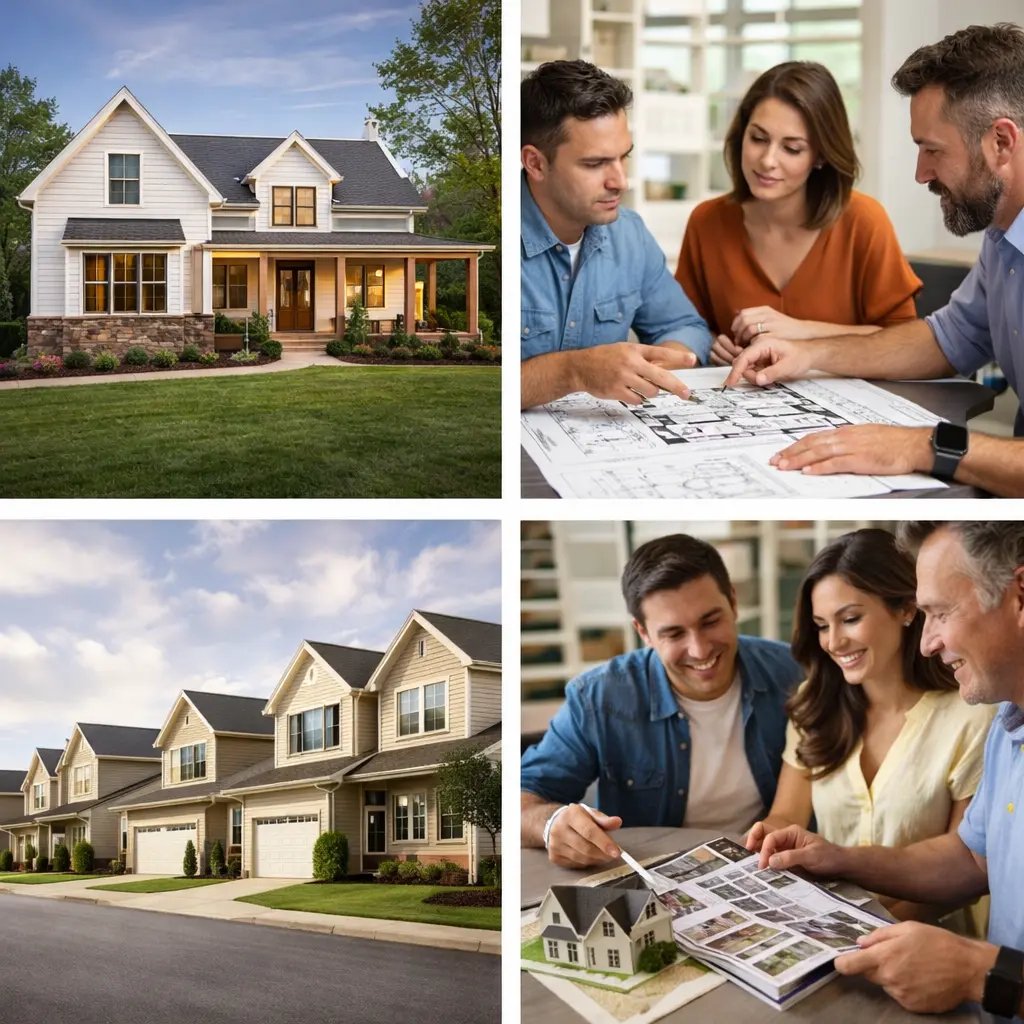
At a high level, the difference comes down to choice versus convenience. A custom home is designed and built specifically for you, while a production home is built from pre-designed plans by a large-scale builder, often in a planned community.
Neither option is universally better, but the right choice depends on your priorities.
What Is a Custom Home?
A custom home is a one-of-a-kind residence built from the ground up to meet your specific needs, preferences, and lifestyle.
Custom Design and Personalization
With a custom home, you typically:
-
Work directly with an architect or custom builder
-
Choose your floor plan, layout, and square footage
-
Select finishes, materials, and fixtures
-
Build on a lot you own or choose independently
This level of personalization allows the home to reflect how you actually live, not just what’s popular in the market.
What Is a Production Home?
A production home is built by a developer using standardized plans, materials, and construction methods.
Standardized Plans and Communities
Production homes typically:
-
Offer a limited number of floor plans
-
Allow modest customization (colors, finishes, upgrades)
-
Are built in master-planned communities
-
Follow a streamlined, predictable process
This model allows builders to control costs and timelines more effectively.
Cost Comparison: Custom Home vs Production Home
Cost is often the deciding factor.
-
Production homes usually have a lower upfront cost due to bulk purchasing and efficient construction methods.
-
Custom homes tend to cost more per square foot but offer better alignment with long-term needs.
While production homes may appear cheaper initially, custom homes can deliver better value over time by reducing renovation needs and improving functionality.
Build Timeline and Project Control
Production homes typically follow a strict schedule, often completing construction in a few months. This predictability is ideal for buyers with tight timelines.
Custom homes usually take longer due to:
-
Design development
-
Permit approvals
-
Specialized materials
-
On-site decision-making
However, custom builds give homeowners more control throughout the process.
Design Flexibility and Customization
This is where the difference becomes most apparent.
-
Custom homes allow full flexibility—from room placement to ceiling height and storage solutions.
-
Production homes limit customization to pre-selected options and upgrades.
If you have specific needs, such as multi-generational living or a home office layout, custom design often makes more sense.
Location and Lot Options
Production homes are typically located in planned neighborhoods with shared amenities, HOA guidelines, and uniform aesthetics.
Custom homes can be built:
-
On rural land
-
In established neighborhoods
-
On unique or irregular lots
This flexibility appeals to buyers who value privacy, views, or proximity to specific locations.
Quality of Materials and Craftsmanship
Production builders focus on consistency and efficiency. Materials are generally durable but standardized.
Custom builders often prioritize:
-
Higher-end materials
-
Detailed craftsmanship
-
Energy-efficient construction
-
Personalized structural features
Quality depends heavily on the builder, but custom homes usually offer more control over construction standards.
Financing and Budget Predictability
Production homes are easier to finance because:
-
Pricing is established upfront
-
Builder incentives are common
-
Construction loans are rarely required
Custom homes often require construction-to-permanent loans and careful budget management. While less predictable, they offer transparency and customization throughout the process.
Who Should Choose a Custom Home?
A custom home may be right for you if:
-
You want a one-of-a-kind design
-
You have specific lifestyle or accessibility needs
-
You own land or want flexibility in location
-
You plan to stay long-term
-
You value personalization over speed
Who Should Choose a Production Home?
A production home is often best if:
-
You want a faster move-in timeline
-
Budget predictability is a priority
-
You like planned communities and amenities
-
You prefer a simpler decision-making process
FAQs: Custom Home vs Production Home
1. Is a custom home always more expensive?
Not always, but it typically costs more per square foot than a production home.
2. Do production homes hold their value?
Yes, especially in desirable communities with strong demand.
3. Can I customize a production home?
Yes, but customization is limited to builder-approved options.
4. Which option takes longer to build?
Custom homes usually take longer due to design and permitting.
5. Are custom homes more energy-efficient?
They can be, especially when designed with modern efficiency standards.
6. Which option is better for first-time buyers?
Production homes are often easier for first-time buyers due to simplicity and cost control.
Conclusion
When deciding Custom Home vs Production Home: Which Is Right for You?, the answer depends on your priorities. If you value personalization, flexibility, and long-term customization, a custom home may be worth the extra investment. If convenience, affordability, and speed matter more, a production home can be an excellent choice.
Both paths lead to homeownership—the right one is the one that fits your lifestyle, budget, and vision for the future.