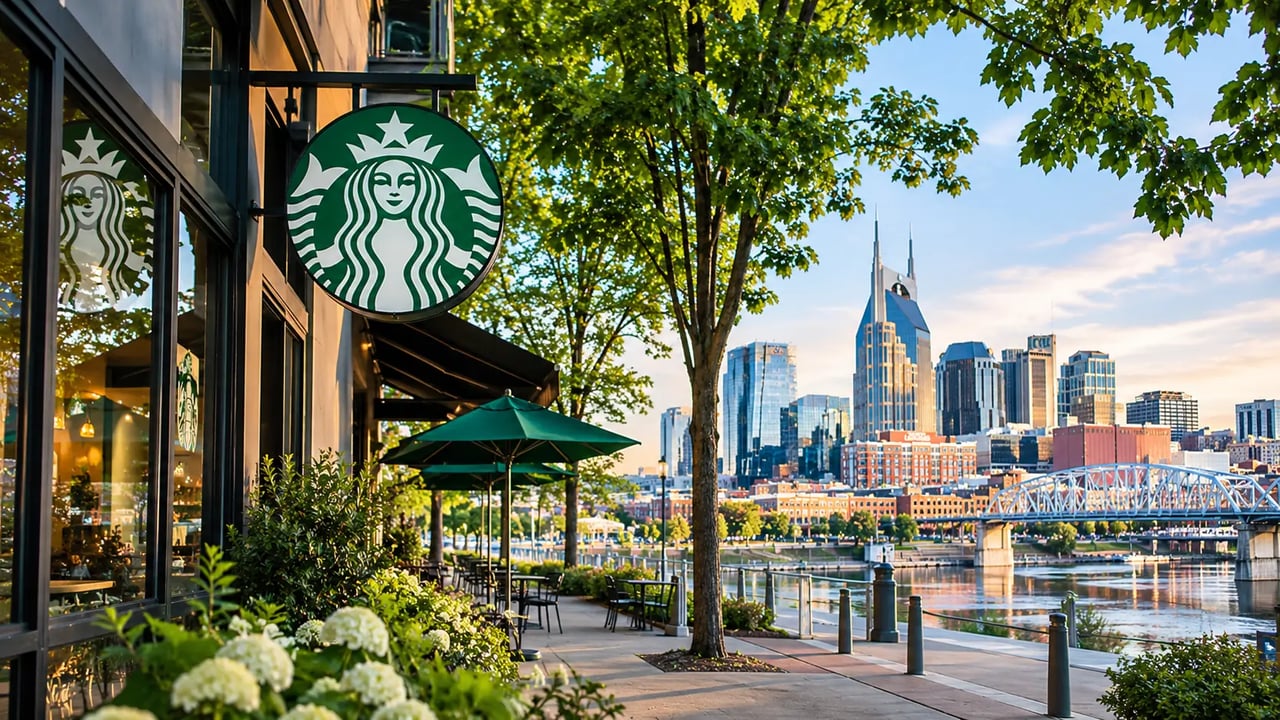
Top 10 Things Starbucks Employees Need to Know About Moving to Nashville
Your Complete Seattle-to-Nashville Relocation Guide: Housing, Neighborhoods, Taxes, Employee Benefits, and Everything You Need to Feel at Home in Middle Tennessee
If you're a Starbucks corporate employee in Seattle considering a move to Nashville, Tennessee, you're probably feeling a mixture of excitement, curiosity, and uncertainty.
And that's completely understandable.
Moving across the country is a major life decision. You're not just changing your work location. You're choosing a new community, navigating a different housing market, planning your finances, and imagining what everyday life could look like in a city you may not know very well.
The good news? Nashville and the surrounding Middle Tennessee communities offer a wide range of opportunities for professionals and families looking for a fresh start.
From the lively neighborhoods near downtown Nashville to the established suburbs of Franklin and Brentwood and growing communities like Mount Juliet and Hendersonville, there's plenty to explore.
With Starbucks expanding its corporate presence in Nashville, now is an especially relevant time for affected employees to understand their relocation options.
If you're moving from Seattle to Nashville for Starbucks, the 10 most important things to understand are your relocation timeline, housing costs, neighborhoods, benefits, taxes, commute, lifestyle, housing choices, homebuying process, and moving budget.
Let's explore each one so you can make informed decisions and approach your next chapter with confidence.
1. Understand Starbucks' Nashville Expansion and Your Relocation Timeline
One of the first things to understand is why Starbucks is establishing a significant corporate presence in Nashville.
On April 21, 2026, Starbucks announced plans to invest $100 million in a new Southeast corporate office in Nashville, with approximately 2,000 support jobs expected over five years.
The Nashville office is designed to support the company's broader growth across the South and East, improve access to suppliers, and expand its corporate talent presence.
Importantly, Starbucks is not abandoning Seattle.
The company has confirmed that Seattle will remain its global and North America headquarters, with a substantial corporate presence continuing there.
Where Will Starbucks' Nashville Corporate Office Be Located?
Starbucks announced that it would establish a temporary Nashville office in The Gulch beginning in May 2026.
Its planned permanent location is the Peabody Union complex in downtown Nashville, with occupancy anticipated in 2027.
Peabody Union is located in the downtown area near the Cumberland River and the city's southern downtown neighborhoods.
For employees relocating from Seattle, this location is particularly important when choosing where to live.
A home that's convenient to downtown Nashville may offer a very different daily experience from one in an outer suburb.
Are All Starbucks Employees Required to Move?
No. The Nashville expansion does not mean every Starbucks corporate employee is required to relocate.
The company's plans involve a combination of newly created positions, bringing some contracted work in-house, and relocating selected teams and functions.
Affected employees should confirm their individual circumstances directly with Starbucks.
Before making housing commitments, understand your expected reporting location, office schedule, transfer date, compensation arrangement, and whether the move is mandatory or optional for your role.
Relocation Tip: Get written confirmation of your official work location and expected start date before signing a lease, purchasing a home, or scheduling interstate movers.
2. Compare Seattle and Nashville Housing Costs Before You Move
For many Seattle-based professionals, housing affordability is one of the most appealing aspects of relocating to Middle Tennessee.
Seattle has long been an expensive housing market, particularly for buyers seeking detached homes in established neighborhoods.
Nashville also has desirable and higher-priced areas, but many parts of Middle Tennessee offer more housing options at lower purchase prices than comparable Seattle locations.
What Does the Nashville Housing Market Look Like in Late 2026?
According to October 2026 Greater Nashville regional housing figures:
Housing Market Indicator | October 2026 |
|---|---|
Median single-family residential sale price | $499,990 |
Median condominium sale price | $343,776 |
Active listings, all property types | 15,379 |
Closed sales, all reported property categories | 2,540 |
Average single-family list-to-contract time | 61 days |
Reported months of available inventory | 6.83 |
These figures cover the nine-county Greater Nashville region, including Davidson, Williamson, Rutherford, Wilson, Sumner, Maury, Robertson, Cheatham, and Dickson counties. They are not Nashville city-only statistics.
The regional median single-family sale price was approximately 2.9% lower than in October 2025.
This indicates that buyers may find more opportunities to negotiate than during the most competitive years of Nashville's recent housing boom.
However, individual neighborhoods and price ranges can behave differently.
What Could Your Seattle Housing Budget Buy in Nashville?
Depending on your budget and preferred location, you may find opportunities for:
- A detached single-family home with a private backyard.
- A newer home with an open floor plan.
- A dedicated home office or additional bedroom.
- A property with more outdoor living space.
- A townhome or condominium near downtown.
- A house in an established suburban neighborhood.
- New construction in a growing Middle Tennessee community.
However, don't assume every Nashville property is a bargain.
Desirable neighborhoods in Nashville, Franklin, and Brentwood can command significant premiums.
Look Beyond the Purchase Price
Before deciding how much house you can afford, compare the full cost of ownership.
That includes mortgage payments, property taxes, homeowners insurance, HOA fees, utilities, maintenance, and transportation expenses.
Expert Tip: If you're selling a home in Seattle to purchase in Nashville, talk with your lender and real estate professional about how your sale proceeds, financing arrangements, and relocation timeline will work together.
3. Choose the Right Nashville Neighborhood for Your Commute and Lifestyle
One of the biggest decisions Starbucks employees will face is choosing where to live.
Middle Tennessee offers everything from urban apartments and historic residential neighborhoods to established suburbs and new construction communities.
The best location depends on your budget, preferred lifestyle, household needs, and how frequently you'll be expected in the office.
The Gulch, SoBro, and Downtown Nashville: Urban Convenience
If you enjoy Seattle's more urban neighborhoods, downtown Nashville may appeal to you.
Areas around The Gulch, SoBro, and downtown offer condominium and apartment living, restaurants, entertainment, and relatively convenient access to central Nashville workplaces.
These locations may be especially attractive if your goal is to reduce your reliance on driving.
However, downtown housing can involve higher HOA fees, parking expenses, and different living arrangements than a detached suburban home.
Germantown and East Nashville: Neighborhood Character
Germantown and East Nashville offer distinctive residential environments.
Germantown features historic architecture, restaurants, and residential redevelopment in a relatively compact urban setting.
East Nashville includes older homes, renovated properties, local shops, restaurants, and newer construction.
These communities may appeal to employees who enjoy neighborhood character and access to city amenities.
Franklin and Brentwood: Established Suburban Communities
Located south of Nashville in Williamson County, Franklin and Brentwood offer extensive residential options.
Franklin is known for its historic downtown, shopping, restaurants, and suburban neighborhoods.
Brentwood offers established communities, residential amenities, and access to major business corridors.
Both locations may appeal to buyers looking for detached homes, although purchase prices can be substantial.
The commute to downtown Nashville should be carefully evaluated.
Mount Juliet and Lebanon: Growing Communities East of Nashville
Mount Juliet and Lebanon offer a mixture of established homes, newer residential developments, and suburban conveniences.
These areas are worth exploring if you're interested in additional housing choices, newer floor plans, or more space.
Commuting routes and travel times vary by neighborhood.
Hendersonville and Gallatin: Communities North of Nashville
Hendersonville and Gallatin provide suburban housing choices in Sumner County.
Both communities offer established neighborhoods, local amenities, and proximity to recreation around Old Hickory Lake.
They may appeal to employees who prioritize suburban living and are comfortable with a longer commute.
Donelson, Bellevue, Murfreesboro, and Smyrna: Additional Options
Donelson provides established neighborhoods in eastern Nashville, with access to the airport and other city amenities.
Bellevue offers residential communities west of downtown.
Murfreesboro and Smyrna provide additional suburban choices in Rutherford County, including new construction and established housing.
How Should You Choose?
Think about what daily life will actually look like.
Do you want to walk to restaurants? Would you prefer a yard and additional living space? Will you commute to downtown every day or follow a hybrid schedule?
The best Nashville neighborhood isn't necessarily the most popular one. It's the one that fits your lifestyle, financial goals, and everyday routine.
4. Understand Starbucks Relocation Assistance and Employee Benefits
Before committing to a cross-country move, make sure you understand what Starbucks may provide as part of your individual relocation arrangement.
Starbucks offers a variety of employee benefits to eligible partners, including health coverage, retirement savings programs, stock-related benefits, and other support resources.
However, employee benefits and relocation assistance are not the same thing.
A general benefits program does not automatically mean your relocation expenses will be covered.
Does Starbucks Offer Relocation Assistance?
Relocation assistance may depend on your role, employment arrangement, and specific transfer offer.
Do not assume that every employee is eligible for the same package.
Ask your Starbucks Human Resources representative whether your written relocation agreement includes any of the following:
- Professional moving services.
- Packing and household goods transportation.
- Temporary housing.
- Travel expenses for you or your household.
- Home-finding visits.
- Vehicle transportation.
- Home sale or home purchase assistance.
- Relocation reimbursement.
- Tax assistance or gross-up provisions.
- Additional relocation-related benefits.
These are items to clarify, not guaranteed Starbucks benefits.
What About Starbucks Employee Benefits?
Eligible Starbucks partners may have access to programs such as medical, dental and vision coverage, the Future Roast 401(k) Savings Plan, Bean Stock, the Stock Investment Plan, paid time off, and other resources.
Eligibility requirements depend on the program and employee circumstances.
If your role, classification, compensation, or work location changes, confirm whether any benefit enrollment actions are required.
Important Questions to Ask Before Accepting a Transfer
Ask for written clarification about your relocation deadline, compensation, bonus arrangements, office attendance expectations, reimbursement limits, benefit eligibility, and any repayment obligations if you leave the company after receiving assistance.
For employees receiving stock-based compensation, understand how relocation may affect tax reporting and withholding.
Relocation Tip: Keep a dedicated folder containing your transfer agreement, benefits information, moving estimates, receipts, and relevant communications. Having everything organized can make a complicated move much easier.
5. Understand the Tax Differences Between Washington and Tennessee
Taxes are an important consideration when comparing Seattle and Nashville.
However, there's a common misconception worth clearing up.
Both Washington and Tennessee currently have no general state individual income tax on wages or salaries.
That means relocating from Seattle to Nashville doesn't automatically create state wage-income tax savings.
There are, however, other differences that could affect your finances.
Tennessee Property Taxes
Tennessee residential property is generally assessed at 25% of its county-appraised value for property tax purposes.
The applicable county and municipal property tax rates are then applied to the assessed value.
For example, a home with a tax-appraised value of $500,000 would have an assessed residential value of $125,000.
The actual annual property tax depends on the property's location and applicable rates.
A home in Davidson County may have different taxes from a similar property in Williamson, Rutherford, Wilson, or Sumner County.
Sales Taxes
Tennessee has a 7% general state sales tax, plus applicable local sales taxes.
Washington also imposes state and local sales taxes, but rates and taxable transactions differ.
Consider everyday expenses when comparing the two states.
Stock Compensation and Investment Taxes
If you receive Starbucks stock awards or other equity compensation, consult a qualified tax professional before relocating.
Washington imposes a capital gains excise tax on certain gains, subject to applicable exclusions and thresholds.
Washington has also enacted an individual high-income tax scheduled to begin in 2028 for income above specified thresholds.
The treatment of compensation, stock vesting, capital gains, and residency can be complicated when employees move between states.
Expert Tip: Don't base your relocation decision on a general statement that Tennessee has lower taxes. Request an individualized comparison that accounts for your actual income, compensation, assets, and housing expenses.
6. Plan for Nashville Transportation and Downtown Commuting
One of the biggest lifestyle adjustments for employees moving from Seattle may be transportation.
Seattle offers a more extensive public transportation network, including light rail, buses, and other regional services.
Nashville is considerably more car-dependent.
Will You Need a Car in Nashville?
If you plan to live in a suburban community, having a vehicle is usually the most practical option.
Downtown residents may have greater opportunities to walk to nearby destinations, but walkability varies substantially by property.
Nashville does have public bus service, and some regional commuter options are available.
However, you should not assume your commute will resemble what you're accustomed to in Seattle.
Understand Nashville Traffic
Major interstates serving Nashville include Interstate 24, Interstate 40, and Interstate 65.
These routes can experience significant congestion during morning and evening commuting periods.
A property that looks relatively close to Peabody Union on a map may involve a longer commute during peak traffic.
Consider Parking Costs and Office Policies
Before selecting a home, ask Starbucks whether parking arrangements or commuter benefits will be available for your role and worksite.
Parking availability and expenses can influence whether living downtown or in a suburb makes more financial sense.
Test Your Commute Before Buying
If possible, drive your prospective route at the times you would normally travel to and from work.
A neighborhood that seems convenient on a weekend may feel different during a busy Tuesday morning.
Relocation Tip: Choose a community based on your real commuting requirements, not simply the number of miles between your home and the office.
7. Prepare for Nashville's Weather, Culture, and Lifestyle
Moving from Seattle to Nashville means experiencing a different climate, geography, and daily rhythm.
There are plenty of things to look forward to, but knowing what will change can make the transition easier.
Get Ready for Hotter, More Humid Summers
Seattle's summers are generally milder and less humid than those in Nashville.
Nashville frequently experiences summer temperatures in the upper 80s and 90s, along with substantial humidity.
Air conditioning is important for most Middle Tennessee households.
When shopping for a home, pay attention to HVAC condition, insulation, windows, and utility costs.
Understand Severe Weather
Middle Tennessee can experience thunderstorms, damaging winds, hail, flooding, and tornadoes.
Before purchasing a home, investigate drainage, flood risk, roof condition, and available insurance coverage.
Establishing a household severe-weather plan is a good idea after moving.
Explore Nashville's Music and Cultural Scene
Nashville is internationally known for country music, but the city's entertainment options are much broader.
You'll find live performances across multiple genres, restaurants, professional sports, festivals, art venues, and neighborhood events.
Whether you're interested in music, food, outdoor recreation, or meeting new people, there are many opportunities to build a routine.
Enjoy Middle Tennessee's Outdoor Recreation
While Nashville doesn't offer Seattle's nearby mountain and coastal scenery, Middle Tennessee has its own natural attractions.
Parks, greenways, lakes, and wooded trails provide opportunities for walking, hiking, cycling, and spending time outdoors.
Popular local destinations include Percy Warner Park, Radnor Lake, and recreation areas around nearby lakes.
Adjust to the Time Zone
Nashville operates on Central Time, two hours ahead of Seattle's Pacific Time.
This is particularly important if you'll continue working regularly with colleagues based in Seattle.
A 9:00 a.m. meeting in Seattle takes place at 11:00 a.m. in Nashville.
The difference may also affect family communication, travel planning, and your everyday routine.
8. Decide Whether to Rent or Buy a Home in Nashville
One of the biggest decisions you'll face is whether to purchase a property immediately or rent while getting to know the area.
There isn't one answer that works for everyone.
When Renting First May Make Sense
Renting may be a good choice if you're unfamiliar with Nashville, uncertain about your long-term role, or still exploring neighborhoods.
A short-term rental arrangement can provide flexibility while you experience different parts of the city and confirm your work routine.
It may also make sense if you're waiting to sell a Seattle property.
When Buying May Make Sense
Purchasing may be appropriate if you expect to remain in Middle Tennessee for several years, have stable finances, and have identified a community that fits your needs.
Greater Nashville's available housing inventory may offer opportunities for buyers to compare properties and negotiate.
However, mortgage affordability and long-term costs still matter.
New Construction Versus Existing Homes
New construction may offer modern layouts, updated systems, and builder warranties.
Existing homes may provide established neighborhoods, mature landscaping, and locations closer to central Nashville.
Both options have advantages and potential drawbacks.
Evaluate construction quality, maintenance needs, warranties, HOAs, and the surrounding area before making a decision.
What About Schools and Family Needs?
If you're moving with children, investigate school boundaries, program availability, transportation, childcare options, and other household priorities.
School assignments and attendance boundaries can change, so verify current information directly with the relevant district.
Also consider healthcare providers, parks, shopping, and activities important to your household.
Expert Insight: If you're unfamiliar with Middle Tennessee, spending time exploring neighborhoods before buying can be one of the most valuable steps in the relocation process.
9. Learn How to Buy a Nashville Home While Still Living in Seattle
Buying a property across the country may sound intimidating, but an organized process can make it much more manageable.
Many aspects of a Tennessee real estate transaction can be coordinated remotely.
Step 1: Get Mortgage Preapproval
Speak with a lender experienced in Tennessee home financing.
If you're relocating for work, discuss any changes in compensation, employment terms, or location requirements.
If your home purchase depends on selling a property in Seattle, explain that early.
Step 2: Choose an Experienced Middle Tennessee Real Estate Professional
An agent familiar with Nashville's neighborhoods and surrounding communities can help you compare housing options, analyze recent sales, and understand local market conditions.
Review buyer representation and compensation arrangements before signing an agreement.
Step 3: Begin With Virtual Home Tours
Virtual tours can help you narrow down homes before traveling.
Ask for detailed walkthroughs showing the layout, condition, outdoor areas, and nearby surroundings.
Step 4: Visit Your Preferred Communities
Whenever practical, schedule an in-person trip to evaluate neighborhoods and tour your strongest property options.
Spend time understanding traffic, local amenities, and the atmosphere of different communities.
Step 5: Make an Informed Offer
A strong offer is not necessarily the highest offer.
Your strategy should consider comparable sales, current competition, property condition, financing, inspection rights, and contractual contingencies.
Step 6: Schedule Appropriate Inspections
Even a beautiful home may have maintenance concerns.
Depending on the property, evaluate roofing, HVAC systems, foundations, drainage, termites, moisture, and other relevant conditions.
Step 7: Coordinate Closing and Moving Dates
Some Tennessee transactions can accommodate remote document signing or notarization, depending on lender and settlement requirements.
Discuss your options early and confirm when funds, documents, and possession will be required.
If you're selling a Seattle home, coordinate both transactions carefully to reduce unnecessary financial pressure.
Relocation Tip: You don't need to navigate every detail yourself. Experienced local real estate, lending, and settlement professionals can help coordinate the process while you're still living in Washington.
10. Create a Realistic Relocation Budget and Moving Checklist
A successful move involves more than finding the right property.
You'll also need to plan the financial and logistical details of moving from Seattle to Middle Tennessee.
Budget for the Full Cost of Relocating
Potential expenses include:
- Interstate moving services.
- Packing and household goods transportation.
- Vehicle shipping or cross-country travel.
- Flights, lodging, and meals.
- Temporary housing.
- Storage.
- Home inspections and closing costs.
- Utility setup.
- Homeowners or renters insurance.
- New furniture or household essentials.
- Emergency savings.
If Starbucks offers relocation reimbursement under your individual agreement, understand what is covered and what documentation is required.
Do not spend money assuming reimbursement is guaranteed.
Your Starbucks Nashville Relocation Checklist
Before accepting or finalizing your move:
Confirm your Nashville role, reporting location, and schedule.
Review your written relocation agreement.
Confirm compensation and benefit arrangements.
Research Nashville housing and rental costs.
Establish a realistic relocation budget.
Discuss tax implications with a qualified professional.
One to three months before moving:
Compare Nashville neighborhoods and suburbs.
Speak with a local real estate professional.
Arrange virtual home tours or a home-finding trip.
Obtain moving estimates.
Review financing options if purchasing.
Coordinate the sale or lease of your Seattle home.
Arrange temporary housing if needed.
Before departure:
Confirm your moving and delivery schedule.
Organize employment and housing documents.
Transfer or establish utility services.
Review insurance coverage.
Update important mailing addresses.
Confirm travel arrangements.
After arriving in Tennessee:
Obtain a Tennessee driver's license within 30 days of establishing residency.
Register your vehicle in Tennessee within 30 days of moving, subject to applicable exceptions.
Establish local healthcare providers.
Confirm internet and utility services.
Update eligible voter registration if applicable.
Familiarize yourself with Nashville's weather alerts and emergency procedures.
Explore your new neighborhood and community.
Remember that relocation schedules and legal requirements can change. Confirm the latest instructions with Starbucks and the appropriate Tennessee authorities.
Frequently Asked Questions About Starbucks Employees Moving to Nashville
Why Is Starbucks Opening a Corporate Office in Nashville?
Starbucks announced its Nashville expansion in April 2026 to support business growth, improve proximity to suppliers, expand access to talent, and strengthen operations across the South and East. The company plans a $100 million investment and approximately 2,000 support positions over five years.
Is Starbucks Moving Its Headquarters From Seattle to Nashville?
No. Starbucks has stated that Seattle will remain its global and North America headquarters. The Nashville office is an additional corporate location, and selected teams and functions are being established or relocated there.
Where Will the Starbucks Nashville Corporate Office Be Located?
Starbucks announced a temporary office in The Gulch beginning in May 2026 and plans to occupy a building at the Peabody Union complex in downtown Nashville in 2027. Employees should confirm their specific worksite and reporting arrangements directly with Starbucks.
How Many Starbucks Employees Are Moving to Nashville?
Starbucks expects approximately 2,000 support positions to be based in Nashville over five years. That figure includes new roles, work brought in-house, and selected transferred teams. It does not mean that 2,000 existing Seattle employees are all relocating.
Does Starbucks Offer Relocation Assistance to Employees?
Relocation assistance depends on the employee's specific arrangement and eligibility. A transfer may involve individually negotiated support, but no universal package should be assumed. Employees should obtain written details from Starbucks Human Resources before making financial commitments.
Is Nashville More Affordable Than Seattle?
Nashville generally offers lower median home prices than Seattle, although individual neighborhoods and property types vary considerably. In October 2026, the Greater Nashville region reported a median single-family residential sale price of $499,990. Overall affordability also depends on income, taxes, transportation, insurance, and living expenses.
Where Should Starbucks Employees Live Near Downtown Nashville?
Employees interested in living near the planned corporate office may explore downtown Nashville, SoBro, The Gulch, Germantown, and nearby urban neighborhoods. Those seeking suburban housing may consider Franklin, Brentwood, Mount Juliet, Hendersonville, Donelson, or other communities, depending on commute expectations and budget.
Can Starbucks Employees Buy a Nashville Home Before Relocating?
Yes. Out-of-state buyers can coordinate financing, virtual tours, offers, inspections, and some closing arrangements remotely. A knowledgeable Middle Tennessee real estate professional can help manage property evaluations and local transaction requirements.
Is It Better to Rent or Buy When Moving to Nashville for Starbucks?
Renting may make sense if you're unfamiliar with Nashville, have an uncertain timeline, or want to experience neighborhoods before purchasing. Buying may be appropriate if your role is stable, you expect to remain in the area long term, and you have identified a home that fits your financial goals.
What Should Starbucks Employees Do Before Accepting a Nashville Relocation Offer?
Review the role, compensation, relocation assistance, worksite location, benefits, and expected timeline. Compare housing costs and commute options, and seek tax or financial advice where appropriate. Understanding these details can help you make a confident and informed decision.
Final Thoughts: Making Your Move From Seattle to Nashville a Positive New Chapter
Relocating for Starbucks is more than a professional transition. It's an opportunity to build a new routine, explore a new part of the country, and decide what you want the next chapter of your life to look like.
Nashville offers a combination of urban amenities, established residential communities, growing suburbs, and housing options that can appeal to professionals arriving from Seattle.
But making the right move takes preparation.
Understanding your employment arrangements, exploring neighborhoods, evaluating housing costs, and planning your relocation budget can help you avoid unnecessary stress.
If you've never lived in Tennessee, don't feel pressured to make every decision immediately.
Take time to learn about the area, compare communities, and determine what matters most to you and your household.
The best relocation decisions aren't simply about moving closer to work. They're about finding a home and community where you can build the life you want.
Moving to Nashville for Starbucks? Let's Find the Right Place for You.
If you're a Starbucks corporate employee relocating from Seattle to Nashville, having knowledgeable local real estate guidance can make your transition much easier.
Whether you're interested in a downtown condominium near the office, a home in East Nashville, an established neighborhood in Franklin or Brentwood, or a newer property in Mount Juliet or Hendersonville, understanding your options is the first step.
A Nashville and Middle Tennessee real estate professional can help you compare neighborhoods, explore available homes, arrange virtual tours, evaluate commute considerations, and coordinate the homebuying process from out of state.
Ready to explore your Nashville relocation options? Connect with a local Middle Tennessee real estate specialist to schedule a personalized relocation consultation and start finding the place you'll be excited to call home.
Your next chapter in Music City deserves a great beginning.
Market Information: Housing figures reflect the October 2026 Greater Nashville nine-county regional market. Individual community and property conditions vary, and figures are subject to change.
Disclaimer: This article is an independent real estate relocation guide and is not affiliated with, sponsored by, or endorsed by Starbucks Corporation. It does not constitute official Starbucks employment or benefits guidance, legal advice, tax advice, or financial advice. Employees should confirm their individual arrangements directly with Starbucks and consult qualified professionals as appropriate.