Selling a Parent’s Home After Death: A Step-by-Step Guide
Losing a parent is difficult enough without also having to manage property, paperwork, finances, and family decisions. Yet for many families, selling a parent’s home after death becomes one of the biggest responsibilities involved in settling the estate.
So, can you sell a parent’s home after they die? In most cases, yes—but the person handling the sale must first have the legal authority to do so. Depending on how the home was owned, that authority may belong to an executor, personal representative, trustee, or the beneficiaries who eventually inherit the property.
The process may also involve probate, property valuation, taxes, outstanding debts, repairs, and coordination among siblings or other heirs.
This guide explains how selling a parent’s home after death generally works, what steps to take, and what potential problems to watch for along the way.
Can You Sell Your Parent’s House After They Die?
Yes, a deceased parent’s home can generally be sold, but someone must have legal authority to sign the listing agreement, approve an offer, transfer title, and complete the closing.
Who has that authority depends largely on how the home was owned and how the parent’s estate was structured.
For example, the person handling the sale could be:
- The executor named in the will
- A court-appointed administrator or personal representative
- The trustee of a trust
- A surviving joint owner
- One or more beneficiaries after ownership has legally transferred to them
You should establish who has authority over the property before listing it for sale.
Why the Way Your Parent Owned the Home Matters
One of the first questions to answer is how the property was titled.
Home Owned Solely by Your Parent
If your parent owned the property individually, the home may become part of their probate estate unless another legally recognized transfer arrangement applies.
An executor or administrator may need to be formally appointed before the property can be sold.
Home Owned Jointly
If another person owned the property jointly with your parent, ownership may pass to the surviving owner automatically in certain types of joint ownership.
However, the result depends on the deed, state law, and the form of ownership.
Home Held in a Trust
If the home was transferred into a properly established living trust, the successor trustee may have authority to manage or sell it according to the terms of the trust.
This arrangement may allow the property to avoid the traditional probate process.
Home Passing Directly to Beneficiaries
Some states permit transfer-on-death deeds or similar arrangements that allow real estate to pass directly to named beneficiaries.
Because property laws differ considerably by state, reviewing the deed and estate documents should be one of your first steps.
Do You Have to Go Through Probate Before Selling a Parent’s Home?
Not always.
Whether probate is required depends on factors such as:
- How the property was titled
- Whether your parent had a trust
- Whether another owner has survivorship rights
- Whether a transfer-on-death arrangement exists
- The value and structure of the estate
- State probate laws
When Probate May Be Required
Probate commonly becomes relevant when a parent owned the home individually and there is no mechanism allowing ownership to transfer outside the estate.
During probate, a court recognizes or appoints someone to administer the estate.
That representative may then have authority to handle estate property, subject to the will, court requirements, and state law.
When Probate May Not Be Necessary
Probate may be avoided when the property passes through certain arrangements such as:
- A living trust
- Qualifying joint ownership
- A transfer-on-death deed
- Another beneficiary designation recognized under state law
Even when probate is avoided, additional legal and title paperwork may still be required before a sale can close.
Can You Sell a House Before Probate Is Finished?
Potentially.
In some situations, an estate representative can sell a home while probate is still underway. However, the representative must generally have the necessary legal authority, and additional court procedures may apply depending on the state and the estate.
This is why it is important to distinguish between listing a property and having the legal authority to complete its sale.
An estate attorney or local probate professional can help determine what is permitted in your jurisdiction.
How to Sell a Parent’s Home After Death in 9 Steps
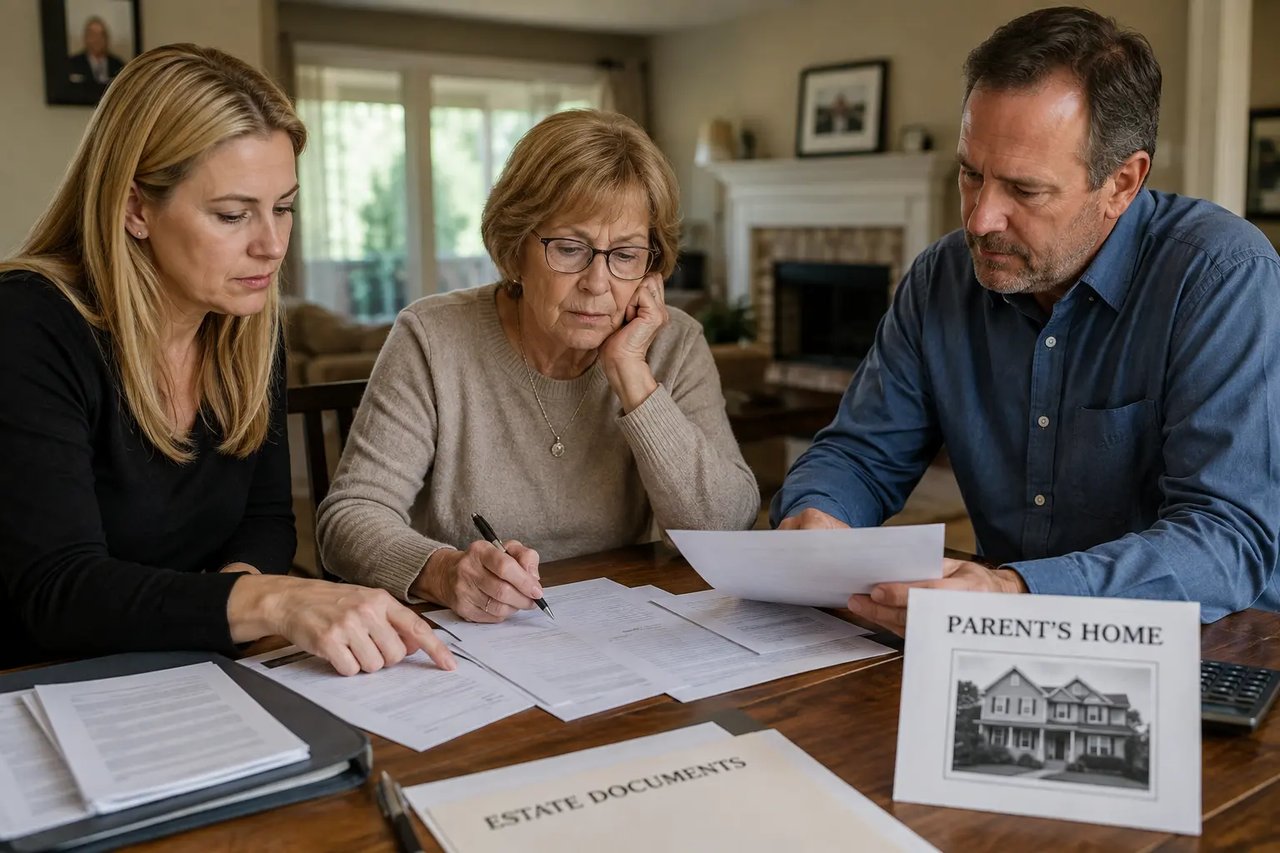
Step 1: Locate the Will and Estate Documents
Start by locating your parent’s important legal and financial records.
Documents worth finding include:
- Will
- Trust documents
- Property deed
- Mortgage statements
- Homeowners insurance policy
- Property tax records
- Loan documents
- Utility information
- Estate planning documents
- Death certificates
Avoid throwing away papers during an initial cleanout. Important financial, legal, insurance, or ownership documents can easily be mixed in with ordinary household items.
Step 2: Determine Who Has Legal Authority
Before making major decisions about the home, determine who has authority to act for the estate.
If there is a will, it may name an executor.
If there is no will, the probate court may appoint an administrator or personal representative.
If the home belongs to a trust, the successor trustee may be responsible for managing it.
Establishing authority early can prevent delays later when it is time to sign contracts or transfer title.
Step 3: Confirm How the Property Is Titled
Obtain and review the current deed.
The deed can help determine:
- Whether your parent was the sole owner
- Whether there was another owner
- Whether survivorship provisions exist
- Whether the property was held by a trust
A title company, real estate attorney, or estate attorney may be able to help clarify ownership questions.
Step 4: Complete Required Probate Procedures
If probate is necessary, the appropriate estate representative typically must be formally recognized before carrying out certain transactions.
The exact requirements vary considerably between states.
Depending on the jurisdiction and circumstances, the representative may be able to sell property independently or may need additional approval.
Avoid assuming that every probate sale works the same way.
Step 5: Determine the Home’s Fair Market Value
Obtaining an accurate valuation is important for both selling and tax purposes.
Families may consider getting:
- A professional appraisal
- A comparative market analysis
- A broker price opinion
A date-of-death valuation can be particularly important because the tax basis of inherited property is generally connected to the property’s fair market value around the date of death, although exceptions can apply.
Keep valuation records with the estate’s permanent financial documents.
Step 6: Secure and Maintain the Property
A vacant home can quickly create financial and maintenance problems.
Make sure someone is responsible for protecting the property.
Tasks may include:
- Checking doors and windows
- Maintaining heating or cooling when necessary
- Keeping utilities active
- Collecting or forwarding mail
- Maintaining landscaping
- Paying property taxes
- Monitoring mortgage obligations
- Addressing leaks or urgent repairs
- Checking smoke detectors and security systems
Contact the insurance company promptly as well. A vacant property may be treated differently from an occupied home under an insurance policy.
Step 7: Sort Through Personal Belongings
Cleaning out a parent’s home can be both emotionally and physically demanding.
Before discarding anything, separate possessions into categories such as:
- Items specifically addressed in the will
- Family heirlooms
- Financial documents
- Jewelry and valuables
- Items beneficiaries want to keep
- Items to sell
- Items to donate
- Items to discard
For larger estates, an estate sale company, appraiser, organizer, or cleanout service may help.
Families should also document decisions when multiple beneficiaries are involved.
Step 8: Decide Whether to Make Repairs or Sell As-Is
You do not necessarily need to renovate an inherited home before selling it.
The better choice depends on the condition of the property, available funds, the local market, and how quickly the estate needs to be settled.
Selling As-Is May Make Sense When:
- The home requires substantial renovation
- The estate has limited cash
- Beneficiaries live out of state
- The family wants a faster transaction
- Managing contractors would be difficult
Making Repairs May Make Sense When:
- The home is fundamentally in good condition
- Minor updates could improve buyer appeal
- The estate has the money and time to complete the work
- Local buyers strongly favor move-in-ready homes
Instead of immediately undertaking a major renovation, consider whether smaller improvements could offer better value.
Cleaning, fresh paint, landscaping, minor repairs, and decluttering can sometimes improve marketability without requiring extensive construction.
Step 9: List, Negotiate, and Close the Sale
Once the legal and practical issues are addressed, the property can move toward the traditional selling process.
A real estate professional familiar with probate or inherited-property transactions can help with:
- Pricing
- Marketing
- Property preparation
- Buyer negotiations
- Required disclosures
- Estate-related documentation
- Coordinating with attorneys or title professionals
Before accepting an offer, make sure the person approving the transaction has the legal power to do so.
At closing, proceeds may go to the estate rather than immediately to individual heirs, depending on ownership and how the estate is being administered.
What Taxes Apply When You Sell an Inherited Parent’s Home?
Taxes are one of the most common concerns heirs have when selling inherited property.
The most important concept to understand is the property’s tax basis.
Understanding the Cost Basis of an Inherited Home
For federal tax purposes, the basis of inherited property is generally the property’s fair market value on the date of the owner’s death.
In certain situations, an alternate valuation date or other rules may apply.
This differs from a home that is gifted during the owner’s lifetime, where different basis rules can apply.
Will You Pay Capital Gains Tax?
You may have a taxable capital gain if you sell the inherited property for more than its applicable adjusted basis.
Consider a simplified example.
Suppose your parent originally purchased a home decades ago for $100,000.
At the time of your parent’s death, the home has a fair market value of $400,000.
If the applicable inherited basis is $400,000 and the property later sells for $420,000, the potential gain is generally calculated using the inherited basis rather than your parent’s original $100,000 purchase price, subject to adjustments and applicable rules.
Selling expenses and certain other items may also affect the final calculation.
Because tax circumstances differ, consult a qualified tax professional before relying on a particular tax result.
Why a Date-of-Death Appraisal Can Be Important
An appraisal can establish documentation supporting what the home was worth when your parent died.
This can become particularly valuable if the property is sold months or years later.
Without reliable valuation records, determining the correct basis later may be more difficult.
Other Taxes and Expenses to Consider
Depending on the circumstances, the estate or beneficiaries may also encounter:
- State inheritance or estate taxes
- Federal estate-tax considerations for qualifying estates
- Property taxes
- Capital gains taxes
- Mortgage payoff costs
- Liens
- Probate expenses
- Legal fees
- Closing costs
State tax rules can differ significantly from federal rules.
Selling a Parent’s Home When There Are Multiple Siblings
When several siblings inherit a home, the financial issues are sometimes easier to resolve than the emotional ones.
One sibling may want to sell immediately.
Another may want to keep the family home.
Someone else may believe the property should be renovated first.
Clear communication can prevent disagreement from turning into a lengthy estate dispute.
Do All Heirs Have to Agree to Sell the House?
Not necessarily.
The answer depends on who legally owns the property and who has authority to administer the estate.
An executor or personal representative may have authority to sell estate property in some circumstances, although the will, probate rules, and state law can place limits on that authority.
If ownership has already been transferred directly to several heirs, the situation may be different.
What If One Sibling Wants to Keep the House?
A sibling who wants to keep the property may be able to purchase the other beneficiaries’ interests.
For example, imagine three siblings each inherit an equal share of a home.
One sibling wants to live there.
That sibling may be able to buy out the other two, assuming everyone agrees on the value and the buyer can obtain the necessary financing.
Other estate assets may sometimes also be considered when dividing inheritances.
Professional valuations are especially useful in these situations because they help establish a neutral starting point.
What If Siblings Cannot Agree?
If disagreements continue, families may consider:
- Mediation
- An estate attorney
- A neutral appraisal
- Written negotiations
- A buyout proposal
If co-owners ultimately cannot agree on what to do with a property, legal remedies may exist, but litigation can be expensive and time-consuming.
Resolving disagreements early is often preferable.
Put Major Decisions in Writing
When multiple beneficiaries are involved, document important decisions.
That may include agreements regarding:
- Repairs
- Maintenance costs
- Property access
- Cleanout expenses
- Listing price
- Offers
- Buyouts
- Distribution of personal property
Good records help reduce misunderstandings.
Should You Sell the Home As-Is or Make Repairs First?
There is no universal answer.
Your goal should not necessarily be to make the house perfect. It should be to determine which improvements, if any, are likely to support a better overall outcome for the estate.
Selling As-Is May Be the Better Choice If:
- Major systems need replacement
- The property has significant deferred maintenance
- The estate lacks money for repairs
- Beneficiaries want to avoid managing contractors
- Speed is more important than maximizing the potential sale price
Repairs May Be Worth Considering If:
- The necessary work is primarily cosmetic
- The local market rewards updated properties
- Repairs can be completed efficiently
- The estate can comfortably fund improvements
Before spending heavily, compare the expected increase in sale value with the actual renovation cost.
A $50,000 renovation does not automatically increase a home’s sale price by $50,000.
Simple Improvements to Consider
Lower-cost improvements may include:
- Deep cleaning
- Removing clutter
- Fresh paint
- Basic landscaping
- Replacing broken fixtures
- Correcting obvious safety problems
- Improving curb appeal
A local real estate professional can help identify which improvements buyers in that particular market are likely to notice.
How Long Does It Take to Sell a Parent’s House After Death?
There is no fixed timeline for selling an inherited home.
The process may be affected by:
- Probate requirements
- Court schedules
- Title problems
- Estate debts
- Disagreements between heirs
- Property condition
- Necessary repairs
- Local market conditions
- Buyer financing
It is also important to separate the estate timeline from the real estate timeline.
A house may sell quickly once listed, but obtaining authority to sell it could take considerably longer.
Conversely, the estate paperwork may be straightforward while difficult market conditions make finding a buyer slower.
How Much Does It Cost to Sell an Inherited Home?
Costs vary depending on the property and estate.
Potential expenses can include:
- Attorney fees
- Probate-related fees
- Appraisal costs
- Property taxes
- Insurance
- Utilities
- Landscaping
- Home maintenance
- Cleanout services
- Estate sales
- Repairs
- Real estate compensation
- Closing costs
- Mortgage payoff
- Liens
Keep records and receipts for estate-related expenses.
The executor, tax professional, or attorney may need them when preparing estate accounting or tax filings.
Documents You May Need to Sell a Deceased Parent’s Home
The exact documents required depend on your state, the title, and the estate structure.
Commonly relevant documents include:
- Death certificate
- Last will and testament
- Trust documents
- Court appointment documents
- Letters testamentary or similar evidence of authority
- Property deed
- Mortgage statement
- Property tax records
- Homeowners insurance information
- Appraisal
- Estate financial records
- Required seller disclosures
- Identification for authorized signers
Collecting these documents early can reduce delays once a buyer is found.
Common Mistakes to Avoid When Selling a Parent’s Home
Trying to Sell Before Establishing Legal Authority
Do not assume that being an heir automatically gives you the right to sign a sales contract.
Confirm who legally controls the property first.
Throwing Away Important Documents
Old desks, filing cabinets, boxes, and drawers may contain deeds, insurance policies, tax returns, account information, or estate documents.
Review paperwork carefully before discarding it.
Forgetting About Property Insurance
Insurance needs can change after an owner dies or a property becomes vacant.
Notify the insurer and verify that appropriate coverage remains in place.
Spending Too Much on Renovations
Large renovations can consume estate funds without producing an equivalent increase in the sale price.
Evaluate improvements based on likely return rather than personal taste.
Failing to Document the Home’s Value
An accurate valuation around the date of death can be important for future tax calculations.
Do not assume you can easily reconstruct the property’s value years later.
Allowing Family Conflict to Stop Every Decision
Grief and money can make disagreements more intense.
Written communication, neutral valuations, and professional guidance can help families make decisions based on facts rather than emotion.
Distributing Money Too Early
Sale proceeds may need to remain in the estate while debts, taxes, administrative expenses, and other obligations are resolved.
Do not assume every dollar from the sale can immediately be divided among beneficiaries.
Who Can Help You Sell a Parent’s Home After Death?
Depending on the situation, several professionals may be involved.
Estate or Probate Attorney
An attorney can help clarify:
- Probate requirements
- Executor authority
- Beneficiary disputes
- Title issues
- Estate obligations
Tax Professional or CPA
A tax professional can assist with:
- Basis calculations
- Capital gains
- Estate tax returns
- Income tax reporting
- Recordkeeping
Real Estate Professional
Look for someone familiar with inherited homes, probate sales, or estate transactions.
They can help with pricing, preparation, marketing, negotiations, and coordinating the transaction.
Real Estate Appraiser
An appraiser can provide an independent opinion of value, including a retrospective valuation when appropriate.
Estate Sale or Cleanout Company
These services can be useful when a home contains decades of belongings and heirs cannot manage the process themselves.
Title or Closing Professional
A title company, attorney, or closing professional can identify ownership issues, liens, documentation requirements, and other matters that could affect the transfer.
What Should You Do First After Inheriting a Parent’s House?
First, secure the property and locate the estate documents. Next, determine who has legal authority over the house, confirm how the property is titled, and find out whether probate or another ownership-transfer process is required.
Avoid rushing immediately into repairs, listing the property, or distributing belongings until you understand the legal status of the home.
Frequently Asked Questions About Selling a Parent’s Home After Death
Can I Sell My Parents’ House Immediately After They Die?
Usually, you must first determine who has legal authority to sell the property. Depending on how the home was owned, this could involve probate, a trust, joint ownership, or another transfer procedure.
Can an Executor Sell a House Without All Beneficiaries Approving?
Possibly. An executor may have authority to sell estate property without unanimous beneficiary approval in certain circumstances. However, the will, state law, probate court requirements, and the executor’s fiduciary responsibilities all matter.
Do All Siblings Have to Agree to Sell an Inherited House?
Not necessarily. If the house remains part of an estate, the estate representative may have certain powers to sell it. If the siblings already jointly own the house, different rules may apply.
Can You Sell a Deceased Person’s House Before Probate Is Completed?
Sometimes. A properly authorized estate representative may be permitted to sell real estate while probate remains open. State procedures determine whether additional court approval is necessary.
Do I Pay Taxes When I Sell My Deceased Parent’s Home?
You may owe tax if there is a taxable gain. Inherited property generally receives a basis tied to its fair market value at the date of death, subject to exceptions and adjustments.
How Is the Value of an Inherited Home Determined?
A professional appraisal is one of the strongest ways to establish the home’s fair market value. A retrospective appraisal may also be used when a value is needed for an earlier date.
What Happens to the Mortgage When a Parent Dies?
The mortgage does not simply disappear. Payments generally still need to be addressed while the estate and ownership of the home are being settled. The loan may ultimately be paid off through a sale, assumed or refinanced when legally permitted, or otherwise handled according to the loan terms and applicable law.
Can I Sell an Inherited Home As-Is?
Yes. Many inherited homes are sold as-is, particularly when beneficiaries do not want to undertake extensive repairs. However, disclosure obligations and other seller requirements may still apply.
Who Pays the Bills on a Deceased Parent’s House Before It Sells?
Property-related expenses are often handled through the estate when appropriate funds are available, although the answer depends on ownership and estate circumstances. Keep records of anyone who personally pays estate expenses.
What Happens If One Heir Refuses to Sell the House?
The options depend on whether the property is still controlled by the estate or has already transferred to multiple owners. Possible solutions include a buyout, mediation, negotiated settlement, or legal action when an agreement cannot be reached.
Final Thoughts on Selling a Parent’s Home After Death
Selling a parent’s home after death involves much more than putting a property on the market.
The most important first steps are to establish who has legal authority over the home, understand how ownership will transfer, protect the property, and determine whether probate is required.
From there, families can focus on valuing the home, handling personal belongings, deciding whether to make repairs, addressing tax considerations, and choosing the best way to sell.
If multiple siblings or beneficiaries are involved, communication and documentation become especially important.
The process may feel complicated, but it becomes more manageable when approached in the right order:
- Establish legal authority.
- Confirm ownership and probate requirements.
- Protect and value the property.
- Review potential tax consequences.
- Agree on a selling strategy.
- Prepare and market the home.
- Complete the sale and properly account for the proceeds.
Because probate, property, and tax laws vary by state and individual circumstances, consider working with qualified estate, tax, and real estate professionals when necessary.
Doing so can help protect the estate, reduce unnecessary delays, and make selling a parent’s home after death as orderly as possible during an already difficult time.