What Does It Really Cost to Own a $2 Million Home in Nashville?
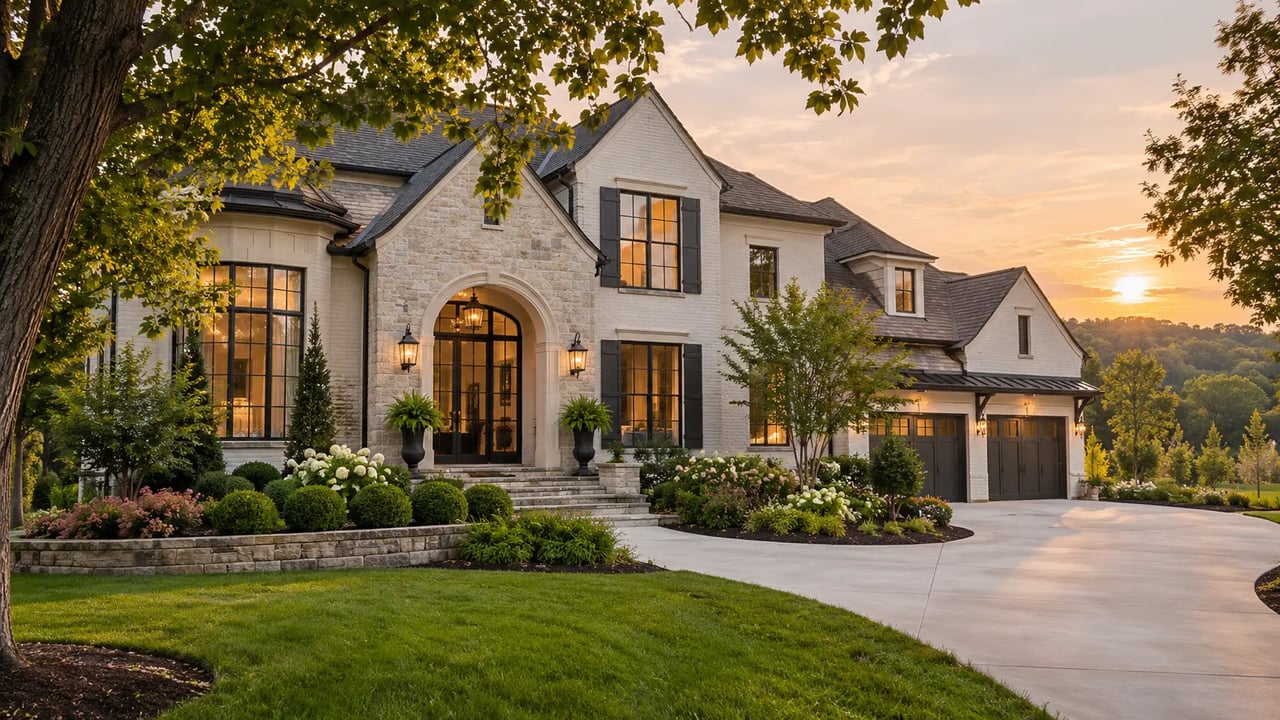
Buying a $2 million home in Nashville sounds like the ultimate luxury real estate milestone. Picture a beautifully designed estate in Belle Meade, a contemporary home in Green Hills, or a private, tree-lined retreat in Forest Hills. The architecture, spacious interiors, premium finishes, and desirable locations can make these homes incredibly appealing. See new listings matching that $2m price point HERE.
But here's a question every luxury homebuyer should ask before making an offer:
What does it actually cost to own a $2 million home in Nashville after the purchase is complete?
The answer involves much more than your mortgage payment.
Property taxes, homeowners insurance, utilities, landscaping, maintenance, and unexpected repairs can add thousands of dollars to your monthly expenses. Even buying the property outright doesn't eliminate these ongoing financial responsibilities.
For buyers relocating to Tennessee, the state's lack of a personal income tax on wages can be especially attractive. However, understanding Nashville's luxury homeownership costs is essential to making an informed financial decision.
Whether you're considering a luxury property in Belle Meade, Green Hills, Forest Hills, or another sought-after Nashville neighborhood, this guide breaks down the real numbers, potential hidden expenses, and financial considerations of owning a $2 million home in Nashville in 2026.
How Much Does It Cost Per Month to Own a $2 Million Home in Nashville?
The estimated monthly cost of owning a $2 million home in Nashville can range from approximately $14,000 to $17,000 or more with a mortgage and a 20% down payment. Actual expenses depend on your interest rate, property taxes, insurance coverage, home size, amenities, and maintenance needs.
If you purchase the home entirely with cash, you could still spend several thousand dollars every month on property-related expenses.
Consider this illustrative scenario:
- Purchase price: $2,000,000
- Down payment: $400,000 (20%)
- Mortgage amount: $1,600,000
- Mortgage term: 30 years
- Illustrative interest rate: 7.28% fixed
- Location: Nashville's Urban Services District
- Property tax assumption: $2 million appraised value
The 7.28% rate reflects the national 30-year fixed mortgage average reported on November 19, 2026. Jumbo mortgage rates may differ considerably based on lender, loan amount, creditworthiness, assets, and other underwriting requirements.
Estimated Monthly Cost Breakdown
Expense | Monthly estimate | Annual estimate |
|---|---|---|
Mortgage principal and interest | $10,947 | $131,364 |
Property taxes | $1,173 | $14,070 |
Homeowners insurance | $750 | $9,000 |
Maintenance and repair reserves | $1,667 | $20,000 |
Utilities and internet | $700 | $8,400 |
Landscaping and lawn care | $400 | $4,800 |
HOA fees | $150 | $1,800 |
Estimated total | $15,787 | $189,434 |
These figures are budgeting examples, not property-specific quotes. Annual figures are calculated using the unrounded property-tax amount, so displayed monthly totals may differ slightly because of rounding. HOA fees apply only where required. Mortgage calculations exclude optional mortgage insurance, points, and other lender-specific charges.
For this scenario, a Nashville luxury homeowner should budget approximately $15,800 per month, or $189,000 per year, including the mortgage and reserves for maintenance.
That's nearly $190,000 annually in housing-related cash flow and planned reserves, before major improvements, unexpected large repairs beyond reserves, or household living expenses.
An important distinction: part of the mortgage payment reduces the outstanding loan balance and builds equity. It is not all a nonrecoverable expense. Nevertheless, the entire payment affects your monthly cash flow.
Mortgage Payments on a $2 Million Nashville Home
For most buyers financing a luxury home, the mortgage represents the largest ongoing expense.
However, the size of your down payment and the interest rate you qualify for can dramatically change the financial picture.
How Much Is the Down Payment on a $2 Million Home?
Luxury homebuyers commonly consider larger down payments to reduce monthly costs and strengthen their financing applications.
Down payment | Cash required | Loan amount |
|---|---|---|
20% | $400,000 | $1,600,000 |
30% | $600,000 | $1,400,000 |
40% | $800,000 | $1,200,000 |
A larger down payment reduces the financed amount, potentially lowering interest expenses and improving your financial flexibility.
However, making a substantial down payment also ties up money that could otherwise remain available for investments, emergencies, renovations, or other financial priorities.
The right amount depends on your income, liquidity, assets, investment strategy, and long-term plans.
What Would the Monthly Mortgage Payment Be?
Using a 30-year fixed mortgage at an illustrative 7.28% interest rate:
Down payment | Loan amount | Monthly principal and interest |
|---|---|---|
20% | $1,600,000 | $10,947 |
30% | $1,400,000 | $9,579 |
40% | $1,200,000 | $8,211 |
Increasing the down payment from 20% to 40% reduces the estimated monthly principal-and-interest payment by approximately $2,736.
Over time, that difference can substantially change your household's available cash flow.
These examples should not be interpreted as guaranteed loan offers. A $2 million transaction will often involve jumbo financing, and jumbo loans have underwriting standards and pricing that may differ from the conventional loans represented by national average mortgage surveys.
How Much Are Closing Costs on a $2 Million Home?
A buyer should also prepare for closing expenses beyond the down payment.
Depending on the transaction and how costs are allocated, these may include:
- Loan origination and underwriting fees
- Property appraisal and specialized inspections
- Lender's and owner's title insurance
- Title and settlement services
- Recording fees and applicable transfer taxes
- Prepaid property taxes and insurance
- Initial escrow deposits
- Optional mortgage discount points
As an initial planning allowance, buyers might reserve approximately 2%–4% of the purchase price, or $40,000–$80,000, for closing-related expenses and prepaids. Actual costs may fall outside this range, and some fees may be negotiated or paid by another party.
For a buyer putting 20% down, that means planning for approximately $440,000–$480,000 in upfront funds before moving expenses, furnishings, or renovations.
For luxury properties requiring custom inspections, specialized insurance, or significant improvements, keeping additional cash available is particularly important.
Property Taxes on a $2 Million Home in Nashville
Property taxes are one of the most significant recurring expenses of owning luxury real estate in Nashville.
Unlike states where property taxes may be calculated directly from the purchase price using a single percentage, Tennessee uses an assessed-value system.
How Are Nashville Property Taxes Calculated?
Residential properties in Tennessee are generally assessed at 25% of their appraised value for property-tax purposes.
The applicable tax rate is then applied to each $100 of assessed value.
For 2026, Nashville's primary Davidson County property-tax rates are:
- Urban Services District: $2.814 per $100 of assessed value
- General Services District: $2.782 per $100 of assessed value
These are two different taxing districts. The correct rate depends on the property's actual location.
What Are the Property Taxes on a $2 Million Home?
Let's use a property with a county appraised value of $2 million in the Urban Services District.
Step 1: Determine assessed value.
$2,000,000 × 25% = $500,000
Step 2: Apply the tax rate.
$500,000 ÷ $100 × $2.814 = $14,070
Estimated annual property taxes: $14,070
Estimated monthly property-tax budget: $1,172.50
For a comparable property in the General Services District:
$500,000 ÷ $100 × $2.782 = $13,910 annually.
The difference between the two primary district rates is relatively small at this value, but additional municipal taxes or special assessments may apply to certain properties.
Importantly, a $2 million purchase price does not automatically mean the county will appraise the property at exactly $2 million. The actual taxable value may differ, and reassessments, appeals, and exemptions can affect individual tax bills.
Do Luxury Neighborhoods Have Different Property Taxes?
Yes. Location matters.
Belle Meade, Forest Hills, Green Hills, and other Nashville neighborhoods can fall within different taxing jurisdictions.
Some properties may also be subject to separate municipal taxes or assessments.
For instance, Belle Meade has a separate municipal property tax in addition to applicable county taxes. Forest Hills does not impose a separate city property tax, although applicable Davidson County taxes still apply.
Always review the actual parcel's tax jurisdiction and current tax record before purchasing a luxury home.
How Much Is Homeowners Insurance on a $2 Million Nashville Home?
Insurance is another expense luxury buyers should evaluate carefully.
A higher-value property may require a more specialized policy than a typical residence, particularly when the home includes custom architecture, expensive finishes, high-end appliances, detached structures, or valuable personal belongings.
For early budgeting purposes, a luxury buyer might use a provisional allowance of $6,000–$15,000 or more annually, equivalent to approximately $500–$1,250 or more per month.
This is an illustrative planning range, not a verified market average for $2 million Nashville properties. Actual quotes could be substantially different.
What Influences Luxury Home Insurance Costs?
Insurance premiums depend on factors including:
- Replacement or rebuilding cost
- Age and condition of the home
- Roof age and construction materials
- Claims history
- Location and weather-related exposure
- Coverage limits and deductibles
- Swimming pools and other amenities
- Security and fire-protection systems
One important detail is that insurance should reflect rebuilding costs, not simply the property's purchase price.
A $2 million home might sit on exceptionally valuable land, while the cost of reconstructing the building could be lower or higher than the purchase price.
Does Nashville's Weather Affect Homeowners Insurance?
Middle Tennessee experiences thunderstorms, hail, strong winds, and tornado-related risks.
These hazards can influence coverage options, deductibles, and premiums.
Buyers should also evaluate whether the property requires separate flood insurance. Standard homeowners insurance typically excludes flood damage, and flood coverage may be important even outside areas where lenders require it.
For a luxury property, consider reviewing extended replacement-cost coverage, personal property limits, liability protection, and umbrella coverage with a qualified insurance professional.
The best time to investigate potential insurance costs is before finalizing the purchase, not after closing.
Maintenance and Repairs: The Hidden Cost of Owning a Luxury Home
One of the biggest mistakes buyers can make is assuming the mortgage payment represents the entire cost of owning a high-end property.
A large home with premium materials and sophisticated systems often requires a larger maintenance budget.
How Much Should You Budget for Annual Home Maintenance?
A frequently used budgeting guideline is to reserve approximately 1%–2% of a home's value annually for maintenance and repairs.
On a $2 million home, that translates to:
Budget approach | Annual reserve | Monthly reserve |
|---|---|---|
1% of home value | $20,000 | $1,667 |
1.5% of home value | $30,000 | $2,500 |
2% of home value | $40,000 | $3,333 |
This guideline is not a prediction of what every owner will actually spend.
A newer home with efficient systems and limited landscaping may have relatively modest routine needs. An older estate with a pool, extensive landscaping, and custom finishes may require significantly more.
For many luxury buyers, the sensible approach is to maintain both a predictable annual maintenance budget and a separate reserve for major capital replacements.
What Maintenance Costs Should You Expect?
Common expenses include HVAC servicing and replacement, roof repairs, gutter cleaning, plumbing maintenance, exterior painting, pest control, driveway repairs, and servicing specialized equipment.
Large custom homes may include multiple HVAC systems, whole-house water filtration, sophisticated lighting controls, security systems, generators, or advanced home automation.
These amenities offer convenience and comfort, but they can also introduce additional service contracts and repair expenses.
Landscaping and Outdoor Maintenance
Nashville's luxury neighborhoods are known for mature trees, attractive yards, established gardens, and well-maintained outdoor spaces.
A property with extensive landscaping may require professional mowing, pruning, irrigation maintenance, seasonal planting, leaf removal, and tree care.
A preliminary budget of $300–$1,000 or more monthly may be reasonable for some properties, but larger estates can exceed that amount.
If you're considering a home in Belle Meade or Forest Hills with substantial acreage, ask for the seller's actual landscaping invoices.
Those records can provide a more realistic estimate than a general rule of thumb.
Swimming Pools and Luxury Amenities
A property with a swimming pool, outdoor kitchen, guesthouse, or entertainment area may carry additional operating costs.
Pool service, chemicals, heating, repairs, and eventual equipment replacement should be considered separately.
Luxury amenities can enhance everyday living, but the cost of keeping them in excellent condition should be part of your decision.
Utility Costs for a $2 Million Home in Nashville
Utilities are easy to underestimate, especially when moving from a smaller residence into a significantly larger property.
A $2 million Nashville home could include 4,000–7,000 square feet or more, although square footage varies by neighborhood, age, lot size, and property features.
Larger living spaces generally increase the potential cost of heating, cooling, water usage, and electricity.
What Should You Expect to Pay for Utilities?
For illustrative budgeting, consider the following monthly allowances:
Utility | Monthly planning range |
|---|---|
Electricity | $250–$600 |
Natural gas or additional heating | $75–$250 |
Water and sewer | $100–$300 |
Internet and communications | $75–$200 |
Combined allowance | $500–$1,350 |
Actual utility expenses can vary widely. Some all-electric homes will have little or no gas bill, while properties with pools, irrigation, multiple HVAC systems, or guest structures may cost considerably more.
Nashville's hot, humid summers make air conditioning an important consideration.
Winter heating requirements also affect annual energy costs.
Before purchasing, request 12 months of utility bills when available. Those statements can reveal seasonal patterns and give you a more accurate picture of operating expenses.
Energy-efficient windows, insulation, HVAC equipment, and smart thermostats can also influence long-term costs.
HOA Fees and Neighborhood-Specific Expenses
Not every $2 million home in Nashville belongs to a homeowners association.
Some established luxury neighborhoods primarily contain independently owned properties without conventional HOA dues, while certain gated communities and planned developments require ongoing payments.
HOA fees may help fund landscaping of shared spaces, gate operations, neighborhood amenities, road maintenance, or other common expenses.
For budgeting, a hypothetical HOA allowance might range from $100 to $500 or more per month, depending on the community and included services.
However, fees can be zero for properties without an HOA or substantially higher in developments with extensive amenities.
Before purchasing, review the association's financial statements, rules, reserve funding, and any pending special assessments.
A relatively modest monthly fee does not necessarily mean the association has sufficient reserves for future repairs.
How Much Income Do You Need to Afford a $2 Million Home in Nashville?
Affording a $2 million property is not simply about earning enough money to cover the mortgage.
Lenders evaluate multiple factors, including income stability, existing debt, credit history, assets, down payment, and available cash reserves.
What Annual Income Might Be Needed?
Using the earlier 20%-down example, the estimated annual housing cash requirement, including a maintenance reserve and other operating expenses, is approximately $189,000.
A household earning $300,000 annually would allocate roughly 63% of its gross income to that illustrative annual budget.
At $500,000 in annual income, the same expenses would represent approximately 38%.
At $600,000 annually, they would represent approximately 32%.
Gross annual income | Approximate share of income allocated to modeled housing budget |
|---|---|
$300,000 | 63% |
$400,000 | 47% |
$500,000 | 38% |
$600,000 | 32% |
$750,000 | 25% |
These are cash-flow comparisons, not mortgage qualification thresholds.
Lender debt-to-income calculations generally focus on qualifying housing payments and other debts, rather than treating every discretionary operating expense or maintenance reserve as debt.
For a household financing $1.6 million, a gross annual income of approximately $500,000–$750,000 may provide a useful starting point for assessing comfort under this particular model, but it is neither a lender requirement nor a guarantee of financial affordability.
Some buyers with substantial assets, large down payments, or other income sources may be comfortable with lower earned income. Others may need considerably more because of existing debts, tuition obligations, lifestyle spending, or investment priorities.
Why Cash Reserves Matter
Liquidity is especially important when purchasing expensive real estate.
Imagine buying a $2 million home and facing an unexpected major roof repair, HVAC replacement, or substantial property improvement shortly afterward.
These costs may need to be paid immediately.
Maintaining accessible funds for emergencies and capital expenditures can help protect the rest of your financial plan.
Is It Better to Buy With Cash or Finance?
Buying with cash eliminates mortgage principal and interest payments.
However, cash buyers still pay property taxes, insurance, utilities, landscaping, maintenance, and any applicable association fees.
Using the sample ownership budget, removing the $10,947 mortgage payment leaves approximately $4,840 per month, or $58,070 per year, in estimated nonmortgage expenses and reserves.
That number may surprise buyers who assume an outright purchase means housing becomes nearly free.
Financing allows buyers to preserve more liquidity, but it creates substantial debt service and interest expenses.
The best choice depends on the buyer's financial goals, opportunity costs, tax situation, risk tolerance, and access to attractive lending terms.
Where Can You Buy a $2 Million Home in Nashville?
One of Nashville's defining characteristics is the variety of luxury lifestyles available within and around the city.
A $2 million budget can mean different things depending on the neighborhood.
Belle Meade: Established Estates and Timeless Luxury
Belle Meade is associated with elegant architecture, mature landscaping, and an established residential atmosphere.
Buyers looking for traditional estates, privacy, and a prestigious setting often include this area in their search.
The maintenance demands of older homes, larger yards, and mature trees deserve close attention.
Municipal property-tax obligations should also be included when reviewing a particular property.
Green Hills: Upscale Living and Everyday Convenience
Green Hills offers an appealing combination of luxury homes, shopping, dining, and access to central Nashville amenities.
Properties may range from established residences to newer custom construction with modern layouts and premium finishes.
Buyers seeking convenience without sacrificing upscale residential living frequently explore Green Hills.
Pay attention to lot size, construction quality, and the age of major mechanical systems.
Forest Hills: Privacy, Space, and Natural Beauty
Forest Hills is particularly attractive to buyers who value larger properties, trees, and a quieter residential environment.
A luxury estate in this area may include substantial grounds, long driveways, and extensive landscaping.
Those features can offer exceptional privacy but may also increase outdoor maintenance and tree-care expenses.
12 South: Modern Luxury and Walkable Living
For buyers who prefer being close to restaurants, boutiques, and an active neighborhood atmosphere, 12 South offers a different luxury experience.
High-end new construction and beautifully updated homes can appeal to those who prioritize design and walkability.
Compared with more estate-oriented communities, buyers may find smaller lots and different maintenance demands.
How Does Nashville Compare With Brentwood?
Brentwood is another popular choice for luxury homebuyers, especially those interested in suburban living, larger homes, and proximity to Williamson County amenities.
Property-tax structures, available land, HOA requirements, and commuting considerations differ between Nashville and Brentwood.
A meaningful comparison should examine individual properties rather than assume one location is universally cheaper.
The purchase price, property-specific tax assessment, insurance requirements, square footage, and maintenance demands matter more than neighborhood reputation alone.
Is Buying a $2 Million Home in Nashville Worth It?
The answer depends on what the property delivers for your lifestyle and how comfortably its costs fit your long-term financial goals.
A luxury home may provide meaningful benefits:
- More space and privacy
- Custom architecture and premium finishes
- Convenient access to desirable amenities
- High-quality entertainment and outdoor spaces
- Flexibility for family, guests, or home offices
- A living environment tailored to your priorities
However, luxury real estate should not automatically be viewed as a guaranteed investment.
Home values can appreciate or decline, and future resale outcomes depend on market conditions, property features, location, and buyer demand.
A $2 million property may also have a smaller pool of potential buyers than a moderately priced home, which can affect marketing time and resale flexibility.
An informed buyer should evaluate both the emotional value of the home and the total financial commitment.
The most comfortable luxury purchase is generally one that enhances your lifestyle without placing unnecessary pressure on the rest of your financial priorities.
How to Reduce the Cost of Owning a Luxury Home in Nashville
While some expenses are unavoidable, smart planning can help reduce the long-term cost of owning a high-end property.
1. Compare Mortgage Options Carefully
Even a modest difference in interest rates can have a meaningful impact on a large loan.
Compare financing structures, closing costs, points, and loan terms rather than considering only the advertised monthly payment.
2. Obtain Insurance Quotes Before Closing
Luxury properties can have unique underwriting considerations.
Request quotes based on the actual home, construction type, replacement cost, and coverage needs before completing the purchase.
3. Review the Property-Tax Assessment
Make sure you understand the county's appraised value, applicable taxing district, and any additional municipal obligations.
If an assessment appears incorrect, learn about the available review and appeal process.
4. Invest in Preventative Maintenance
Regularly servicing HVAC systems, inspecting the roof, maintaining drainage, and addressing small problems early can help reduce the risk of more expensive damage.
5. Evaluate Energy Efficiency
Modern insulation, efficient mechanical systems, smart temperature controls, and properly maintained equipment may help manage utility expenses.
6. Request Actual Operating Expenses From the Seller
Before making a final decision, ask for available records showing utility bills, landscaping invoices, pool service, insurance expenses, and major repairs.
Actual property records are often more useful than broad estimates.
7. Maintain a Dedicated Home Reserve
Set aside funds for repairs and replacements.
This can make large expenses more manageable and reduce the need to sell investments or take on expensive short-term borrowing.
Frequently Asked Questions About Owning a $2 Million Home in Nashville
How much is the monthly payment on a $2 million house in Nashville?
With 20% down, a $1.6 million mortgage at an illustrative 7.28% fixed rate over 30 years would require approximately $10,947 monthly in principal and interest. Adding estimated property taxes, insurance, utilities, upkeep, and other expenses could bring the monthly ownership budget to approximately $14,000–$17,000 or more.
What are the property taxes on a $2 million home in Tennessee?
For a property in Nashville's Urban Services District with a county appraised value of $2 million, the estimated 2026 annual property tax is $14,070. Different jurisdictions, appraised values, municipal taxes, and special assessments can change the actual bill.
How much income do you need to buy a $2 million house?
Income requirements vary based on the down payment, financing terms, existing debt, and assets. Under the example used in this article, a household earning roughly $500,000–$750,000 annually may have more flexibility to manage the approximately $189,000 annual housing budget, but individual affordability and lender qualification may differ substantially.
How much is homeowners insurance on a $2 million house?
An illustrative initial budget might be $6,000–$15,000 or more annually, but this is not a guaranteed or market-average premium. The actual price depends on reconstruction costs, coverage limits, construction, claims history, deductibles, and location-specific risks.
How much does it cost to maintain a luxury home annually?
A common budgeting guideline is 1%–2% of the property's value per year. For a $2 million home, that means reserving approximately $20,000–$40,000 annually, although actual costs can be higher or lower.
Is Nashville expensive for luxury homeowners?
Nashville luxury homeownership can involve substantial mortgage, tax, insurance, maintenance, and utility costs. While Tennessee has no individual income tax on wages, buyers should compare overall ownership costs rather than focusing on a single tax advantage.
Is it cheaper to own a luxury home in Nashville or Brentwood?
It depends on the property. Differences in property taxes, home size, insurance, HOA dues, landscaping, and ongoing maintenance can outweigh a simple comparison of local tax rates.
What are the hidden costs of buying a luxury home?
Potential hidden expenses include major mechanical replacements, roof repairs, specialized insurance, irrigation systems, tree maintenance, pool servicing, HOA assessments, custom-home repairs, and significant utility bills.
How much money do I need upfront for a $2 million home?
With 20% down, a buyer would need $400,000 for the down payment. Using a broad 2%–4% closing-cost and prepayment allowance, estimated upfront funds could total approximately $440,000–$480,000, before moving costs, renovations, furnishings, and additional reserves.
Can I afford a $2 million house with a $300,000 salary?
It may be difficult under a conventional 20%-down financing scenario, particularly if you have other debts or substantial living expenses. However, a larger down payment, significant assets, or alternative financing arrangements can change the calculation. A personalized assessment from a qualified lender and financial adviser is essential.
Final Thoughts: What Does It Really Cost to Own a $2 Million Home in Nashville?
Owning a $2 million home in Nashville can provide an exceptional lifestyle, but the purchase price is only the starting point.
For buyers financing the property with a 20% down payment, the total estimated monthly budget could reach approximately $14,000–$17,000 or more, depending on mortgage terms and the property's ongoing expenses.
Under the detailed scenario in this guide, that works out to approximately $15,800 per month or $189,000 annually.
And even if you purchase the home outright, you may still face $50,000–$70,000 or more in annual nonmortgage expenses and maintenance reserves, depending on the home.
The key is understanding how every expense fits into your financial picture.
A luxury property in Belle Meade, Green Hills, Forest Hills, or another desirable Nashville neighborhood may offer outstanding privacy, comfort, architecture, and lifestyle benefits.
But the smartest buyers look beyond the listing price.
They review property taxes, request insurance quotes, investigate maintenance history, compare financing options, and build a long-term ownership budget before making their decision.
Thinking about buying a $2 million home in Nashville?
Work with a knowledgeable Nashville luxury real estate professional and qualified financial advisers who can help you evaluate properties, understand ownership expenses, and make an informed purchasing decision.
Because when it comes to luxury real estate, the goal isn't simply to afford the home.
It's to enjoy everything the home has to offer while maintaining the financial freedom that makes luxury living worthwhile.