What to See on Your First Nashville Relocation Trip
If you are thinking about moving to Nashville, your first relocation trip should look very different from a typical vacation.
There is nothing wrong with seeing Broadway, catching live music, enjoying a great meal, or visiting some of Nashville's best-known attractions. But if the purpose of your trip is to decide whether you could actually live here, your priorities should go beyond sightseeing.
You need to see Nashville as a future resident.
That means driving potential commutes, exploring neighborhoods at different times of day, touring homes within your budget, visiting grocery stores, checking healthcare access, walking local streets, and getting a feel for the communities surrounding Nashville as well as the city itself.
Your goal is not simply to answer, “Do I like Nashville?”
A better question is:
“Can I picture my everyday life here?”
What Should You See on Your First Nashville Relocation Trip?
On your first Nashville relocation trip, focus on the places and experiences that will affect your daily life after the move.
That typically includes:
- Nashville neighborhoods that match your lifestyle
- Homes within your actual budget
- Potential work commutes
- Grocery stores and shopping
- Healthcare
- Parks and greenways
- Restaurants and coffee shops
- Airport access
- Walkability
- Traffic
- Nearby suburbs and surrounding communities
- Everyday services
Try to leave Nashville with a shortlist of two or three areas that deserve deeper research.
If you finish your trip knowing where you might realistically want to live, the visit has done its job.
Start With Downtown Nashville—but Do Not Spend Your Entire Trip There
Downtown Nashville is a useful place to begin because it gives you a geographical anchor.
Spend enough time downtown to understand how the urban core connects with surrounding neighborhoods, employment centers, entertainment districts, the Cumberland River, and major roads.
You might explore:
- Downtown
- Broadway
- SoBro
- The Gulch
- Midtown
- Areas surrounding the Cumberland River
But remember that a relocation trip is not a tourism trip.
Unless you are seriously considering living downtown, you probably do not need to spend an entire day on Lower Broadway.
Many Nashville residents may visit downtown for entertainment, sports, concerts, restaurants, or work while spending most of their day-to-day lives elsewhere.
Once you understand the center of the city, move outward.
Explore Nashville Neighborhoods Based on the Lifestyle You Want
There is no single “best neighborhood in Nashville.”
A neighborhood that works perfectly for someone who prioritizes nightlife and walkability may be completely wrong for someone who wants a large yard, quieter streets, or a shorter suburban commute.
Before your trip, decide which lifestyle characteristics matter most.
If You Want Walkability, Restaurants, and Urban Energy
Start with some of Nashville's closer-in neighborhoods.
Areas worth exploring may include:
- The Gulch
- Germantown
- East Nashville
- 12 South
- Midtown
- Hillsboro Village
Each has a different feel.
Do not simply drive through.
Park your car and walk.
See how long it takes to reach a coffee shop, restaurant, park, gym, or other everyday destination.
Look at the sidewalks. Cross the major streets. Notice traffic and parking.
A neighborhood can be marketed as walkable while the specific block you are considering feels very different.
If You Want an Established Residential Neighborhood
Some relocating buyers want to be relatively close to central Nashville but prefer a more residential setting.
If that sounds like you, spend time driving established neighborhoods away from the busiest commercial corridors.
Do not limit yourself to the main roads.
Turn onto side streets.
Notice:
- Lot sizes
- Home ages
- Sidewalk availability
- Mature trees
- Hills and terrain
- Street width
- Driveways
- Nearby commercial areas
- Traffic patterns
Two neighborhoods separated by only a few miles can feel surprisingly different.
If You Want More Space or Newer Housing
Your search may extend beyond central Nashville.
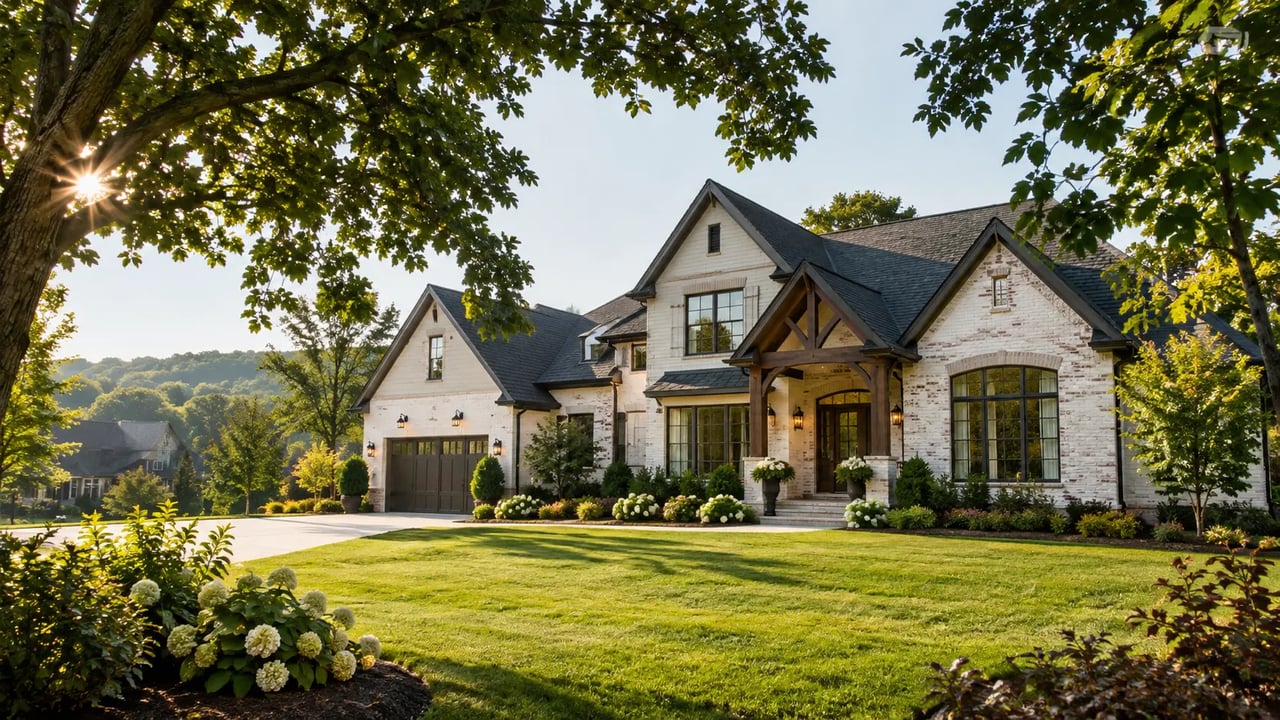
The broader Middle Tennessee region offers communities with newer subdivisions, larger homes, more land, and different price points.
Depending on your needs, consider exploring:
- Franklin
- Brentwood
- Nolensville
- Hendersonville
- Mount Juliet
- Gallatin
- Spring Hill
- Murfreesboro
Do not assume that all of these communities offer the same suburban experience.
They differ in housing, commute times, road networks, commercial development, taxes, amenities, and proximity to Nashville.
Drive the Commute You Would Actually Make
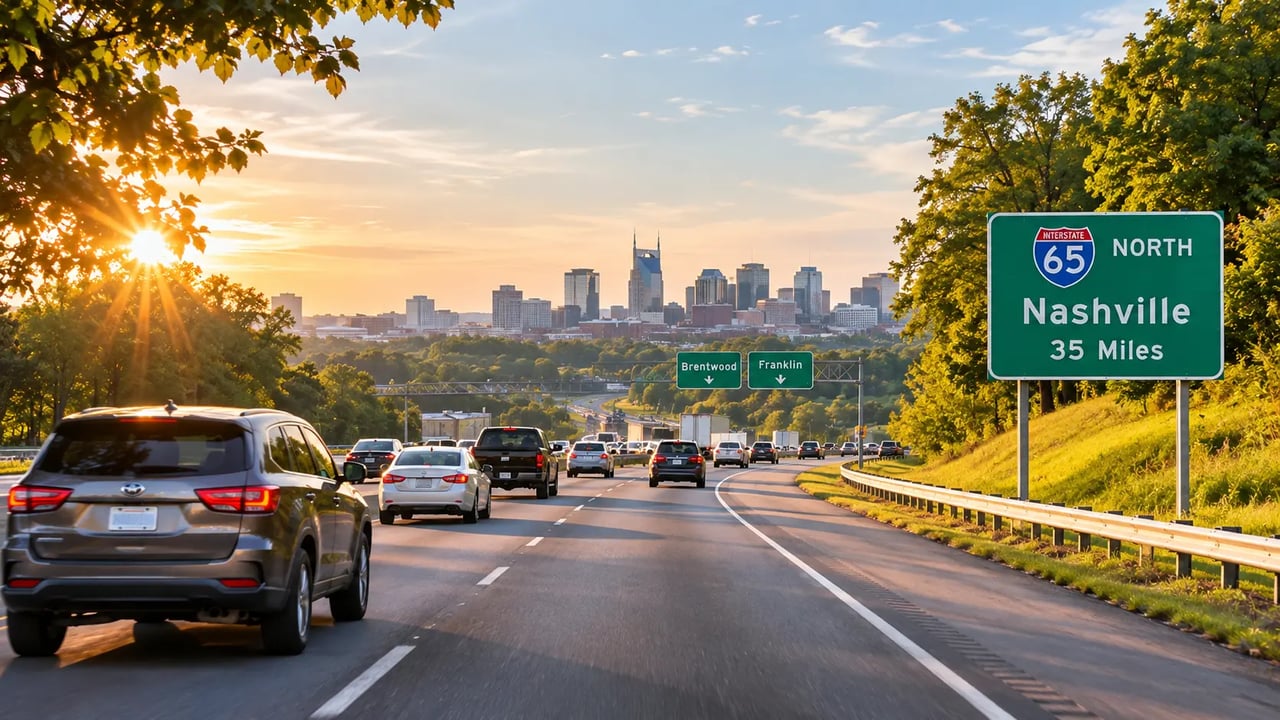
One of the most useful things you can do on a Nashville relocation trip is intentionally drive in traffic.
That may sound strange.
Most visitors try to avoid rush hour.
You should experience it.
A house that appears close to your workplace on a map may feel very different during the morning commute.
Test the Morning Commute
If you expect to commute to work at 7:30 a.m., drive the route at approximately 7:30 a.m.
Do not rely entirely on a travel-time estimate you checked on a Sunday afternoon.
Notice:
- Interstate congestion
- Major intersections
- Construction
- School traffic
- Merging points
- Traffic signals
- Alternate routes
Ask yourself whether you would be comfortable making the drive repeatedly.
Test the Evening Commute
Then reverse the trip during afternoon or evening traffic.
A route that works well in one direction may become significantly slower in the other.
This is especially important if you are considering living farther outside Nashville.
A larger home or lower purchase price may be attractive, but the tradeoff may be additional time in the car.
Do Not Ignore Weekend Traffic
Weekend traffic matters too.
Entertainment, tourism, events, shopping, sports, and neighborhood activity can create very different driving conditions from weekday commuting.
Experience your potential neighborhood on both a weekday and weekend if your schedule allows.
Pay Attention to Nashville's Changing Transportation Network
Nashville remains a relatively car-dependent city, but its transportation infrastructure is changing.
The voter-approved Choose How You Move transportation program is bringing ongoing investments in sidewalks, traffic signals, transit service, safety improvements, and major transportation corridors.
Plans include significant sidewalk expansion, smarter traffic signals, more frequent transit service, and improvements designed to make it easier to move around Nashville without relying exclusively on a car.
For a relocating buyer, this means you should evaluate both what exists today and what may be changing around the neighborhood you are considering.
Look for:
- Existing sidewalks
- Current transit routes
- Planned sidewalk improvements
- Major road projects
- Bike infrastructure
- Bus stops
- Construction
- Future transportation projects
Do not assume today's transportation environment will remain unchanged.
Visit Potential Neighborhoods More Than Once
A neighborhood can make a completely different impression depending on when you visit.
If you are seriously considering an area, try to see it:
- In the morning
- During rush hour
- Around lunchtime
- In the evening
- After dark
- On a weekday
- On a weekend
Pay attention to how the environment changes.
Does parking become difficult at night?
Does traffic build during school pickup?
Do restaurants create substantial evening activity?
Is construction occurring nearby?
Does the neighborhood become very quiet after business hours?
You are trying to understand the rhythm of the area.
Tour Homes in Several Different Parts of Nashville
Even if you are not ready to make an offer, touring homes during your relocation trip can be extremely educational.
Online listings are useful for research, but physically walking through homes gives you context that photographs cannot.
Compare properties in several locations.
You may discover that your budget buys very different homes depending on where you look.
For example, your options might include:
- A condo closer to downtown
- A townhome in a developing neighborhood
- An older single-family home in an established area
- New construction farther from downtown
- A larger suburban property
- A home with more land outside the urban core
Touring different property types helps you decide which compromises actually matter.
Look Beyond the House During Every Tour
It is easy to become focused on kitchens, flooring, bathrooms, and finishes.
During a relocation trip, the location deserves just as much attention.
When touring a home, step outside and look around.
Notice:
- Neighboring properties
- Street traffic
- Road condition
- Sidewalks
- Hills and slopes
- Drainage
- Mature trees
- Utility lines
- Parking
- Nearby commercial buildings
- New construction
- Vacant parcels
- Noise
Stand outside quietly for a minute.
Listen.
You may hear traffic, airplanes, trains, construction, businesses, dogs, or other sounds that do not appear in listing photographs.
Visit a Grocery Store in Every Area You Seriously Consider
This may not sound exciting, but it is one of the most useful relocation exercises.
Visit the grocery store.
How far is it from the neighborhood?
How long does the drive take?
What else is nearby?
Look for:
- Pharmacies
- Gas stations
- Restaurants
- Coffee shops
- Gyms
- Hardware stores
- Banks
- Dry cleaners
- Everyday retail
One of the biggest differences between vacationing somewhere and living there is the number of ordinary errands you perform every week.
A location that seems perfect on a map may feel inconvenient once you start thinking about daily routines.
Check Healthcare Access
Healthcare can be an important part of choosing where to live.
Nashville has a major healthcare industry and numerous medical facilities, but accessibility still depends on where you live.
Consider your proximity to:
- Hospitals
- Primary-care physicians
- Specialists
- Urgent-care facilities
- Pharmacies
- Dental care
If you regularly visit a specialist, identify likely providers before choosing a neighborhood.
For some buyers, healthcare access may matter more than being close to downtown entertainment.
Explore Nashville's Parks and Greenways
Nashville offers more outdoor recreation than many first-time visitors realize.
Spend part of your relocation trip exploring the parks and greenways near the neighborhoods you are considering.
Popular options include areas around:
- Centennial Park
- Shelby Bottoms
- Percy Warner Park
- Edwin Warner Park
- Cumberland River Greenway
- Local neighborhood greenways
Nashville continues expanding and connecting portions of its greenway system, with additional projects underway or planned.
If walking, running, cycling, or spending time outdoors is part of your routine, proximity to green space may deserve a place on your neighborhood checklist.
Spend Time in East Nashville
East Nashville frequently appears in relocation searches, but it covers a broad collection of neighborhoods rather than one uniform area.
Spend enough time there to understand the differences.
Explore residential streets as well as commercial corridors.
Look at:
- Housing styles
- Restaurants
- Coffee shops
- Historic homes
- New construction
- Traffic
- Access to downtown
- Nearby parks
- Neighborhood development
If you like the general area, narrow your research further instead of treating “East Nashville” as one location.
Explore 12 South and Nearby Neighborhoods
12 South attracts visitors because of its restaurants, shops, walkability, and recognizable neighborhood character.
But a relocation visit should go beyond the commercial strip.
Walk the residential streets.
Look at the homes.
Notice traffic and visitor activity.
Consider how the area feels once you move several blocks away from the busiest businesses.
The experience of visiting 12 South for brunch is not necessarily the same as living nearby every day.
Visit Germantown
Germantown can be useful to explore if you are interested in a closer-in, more urban lifestyle.
You will find a mix of historic character, newer residential development, restaurants, condos, and townhomes.
Spend time walking rather than seeing the neighborhood exclusively from the car.
Compare its density and housing styles with other Nashville neighborhoods on your list.
Explore Green Hills and West Nashville
Western and southwestern Nashville offer another set of options for relocating buyers.
Depending on the area, you may find established neighborhoods, convenient shopping, healthcare access, and relatively easy connections to other parts of Nashville.
Pay attention to traffic patterns.
A home that seems close to everything may still require navigating busy commercial corridors.
Drive Through Franklin If You Are Considering Suburban Living
Franklin frequently appears on relocation shortlists, particularly among people exploring communities south of Nashville.
Historic downtown Franklin is worth seeing.
Its walkable historic district offers shops, restaurants, architecture, and a distinct sense of place.
But do not judge the entire community based on downtown alone.
Also explore:
- Residential neighborhoods
- New development
- Major shopping areas
- Commuter routes
- Roads leading toward Nashville
Ask yourself what your daily routine would look like if you lived there.
Explore Brentwood
Brentwood is another community many relocating buyers research.
If it fits your budget and priorities, spend time driving both residential areas and major roads.
Consider:
- Housing styles
- Lot sizes
- Shopping access
- Nashville commute
- Interstate access
- Everyday services
Do not simply drive through once and make a decision.
Explore Hendersonville, Mount Juliet, or Gallatin
If you are open to living north or east of Nashville, these communities deserve consideration.
Each provides a different relationship to Nashville itself.
Evaluate:
- Home prices
- Property types
- Highway access
- Commute times
- Shopping
- Restaurants
- Recreation
- Lake access when relevant
- Airport access
Again, physically drive your likely commute.
Distance alone will not tell you the full story.
Explore Nolensville, Spring Hill, or Murfreesboro
South and southeast of Nashville, relocating buyers will find additional communities with growing housing inventories and ongoing development.
These areas may offer different combinations of:
- New construction
- Suburban neighborhoods
- Larger homes
- Shopping
- Schools
- Community amenities
The biggest tradeoff may be commuting.
Someone who works remotely several days a week may evaluate these locations differently from someone driving into Nashville every morning.
Test Your Airport Access
Nashville International Airport can be an important part of relocation planning.
If you travel frequently for work or expect family and friends to visit often, test the drive from your preferred neighborhood to the airport.
This is especially valuable for:
- Business travelers
- Remote professionals
- People maintaining relationships in another state
- Frequent flyers
- Buyers relocating from major airline hubs
Airport proximity may matter more than you initially expect.
Experience Nashville Traffic Instead of Avoiding It
A relocation trip is one of the rare times when you should deliberately seek out traffic.
Drive the roads you expect to use.
Experience:
- Morning rush hour
- Afternoon rush hour
- Friday traffic
- Weekend activity
- Major interstate interchanges
You do not need to spend hours sitting in congestion for research purposes.
But you should understand what normal travel feels like before choosing where to live.
Check Walkability Block by Block
Walkability is highly location-specific.
Do not assume that because a neighborhood is generally described as walkable, every home within it provides the same experience.
Ask yourself:
Can I walk to coffee?
Can I reach restaurants?
Can I walk to a park?
Are sidewalks available?
Are major road crossings comfortable?
Would I actually choose to walk here regularly?
These questions are more meaningful than a generic walkability label.
Visit Your Favorite Neighborhoods After Dark
An evening visit reveals things you may not notice at noon.
Look at:
- Street lighting
- Restaurant activity
- Parking
- Traffic
- Noise
- Pedestrian activity
- Entertainment venues
The purpose is not to assign a neighborhood a subjective safety rating.
It is to decide whether the environment matches your preferences.
Someone who enjoys lively streets may love an area another person finds too busy.
Pay Attention to New Construction and Development
Nashville continues to change.
New housing, infrastructure, commercial development, transportation improvements, and redevelopment can alter how a neighborhood looks and functions.
While exploring, notice:
- Construction cranes
- Apartment projects
- Road work
- New retail
- Vacant land
- Major development sites
- New subdivisions
Ask your real estate professional about significant projects near any property you are seriously considering.
A vacant lot today may not remain vacant.
Spend Part of Your Trip Doing Completely Normal Things
One of the best ways to evaluate Nashville is to stop behaving like a visitor.
Create a normal day.
Wake up and get coffee near a neighborhood you like.
Drive to a grocery store.
Go for a walk.
Visit a gym.
Grab lunch.
Run an errand.
Drive somewhere during rush hour.
Have dinner locally.
Return to the neighborhood in the evening.
By the end of that day, you may know more about whether you could live there than you learned from several days of sightseeing.
Meet With a Local Real Estate Professional
If buying a home is part of your move, meeting with a Nashville-area real estate professional during your relocation trip can make the visit much more efficient.
Ideally, discuss your priorities before arriving.
Share information such as:
- Budget
- Desired property type
- Work location
- Commute tolerance
- Space requirements
- Neighborhood preferences
- Walkability preferences
- Move timeline
- Whether you prefer Nashville or surrounding communities
That allows your property tours to be focused rather than random.
A knowledgeable local professional can also help explain why two areas that appear similar online may offer very different buying experiences.
Questions to Ask Yourself During Your Nashville Relocation Trip
Keep a running list as you explore.
Ask:
Which neighborhoods fit my actual housing budget?
How long would my commute really take?
How important is airport access?
Do I prefer urban, suburban, or more rural living?
How much home and yard space do I really need?
Is walkability important to me?
What services do I use every week?
How close do I want to be to downtown Nashville?
Am I comfortable with the development occurring around this area?
Would I enjoy living here on an ordinary Tuesday?
That final question may be the most important one.
What Should You Avoid Spending Too Much Time Doing?
Do not eliminate fun from your trip.
Enjoy Nashville.
See some live music. Have a good dinner. Walk around downtown.
But if relocation is your primary purpose, avoid spending most of your limited time:
- On Broadway
- At tourist attractions
- Sitting at the hotel
- Visiting only downtown
- Looking only at houses
- Driving each neighborhood once
- Exploring only during quiet daytime hours
Your goal is to understand daily life.
A Sample 3-Day Nashville Relocation Trip
If this is your first scouting trip, a three-day itinerary can provide a useful introduction.
Day 1: Understand Nashville
Morning
Start near central Nashville.
Explore downtown, The Gulch, Midtown, or another central district to establish your geographical bearings.
Then drive through several closer-in residential areas.
Afternoon
Explore two or three neighborhoods that match your lifestyle.
Walk them.
Stop for lunch or coffee.
Visit a grocery store.
Look at housing.
Evening
Return to the neighborhood you liked most.
Have dinner there and see how the area feels after work hours.
Day 2: Explore Homes and Surrounding Communities
Morning
Tour homes in several areas.
Compare property types and price points rather than seeing five nearly identical homes in the same subdivision.
Afternoon
Drive to surrounding communities that fit your shortlist.
Depending on your priorities, that might mean Franklin, Brentwood, Mount Juliet, Hendersonville, Nolensville, Gallatin, Spring Hill, Murfreesboro, or another Middle Tennessee community.
Evening
Drive back toward Nashville during a realistic commute period.
The experience may change how you feel about the distance.
Day 3: Live Like a Local
Spend your final day doing ordinary things.
Visit:
- A grocery store
- A local park
- A coffee shop
- Healthcare facilities
- Shopping
- Everyday services
- The airport if access matters to you
Then revisit your top two or three neighborhoods.
By the end of the day, rank them.
Write down what you liked and what concerned you before you leave Nashville.
Your Nashville Relocation Trip Checklist
Before heading home, try to complete the following:
- Visit at least three Nashville neighborhoods.
- Explore at least one surrounding community.
- Tour homes within your actual budget.
- Drive your likely commute.
- Experience rush-hour traffic.
- Visit neighborhoods during different times of day.
- Walk through your favorite areas.
- Visit grocery stores and everyday services.
- Check healthcare access.
- Explore nearby parks or greenways.
- Test airport access if important.
- Investigate transportation options.
- Look for nearby construction and development.
- Narrow your search to two or three locations.
You do not need to choose a house on your first trip.
You simply need to make your next decision easier.
Frequently Asked Questions About Nashville Relocation Trips
How Many Days Should I Spend on a Nashville Relocation Trip?
Three to four days can provide a useful first look for many relocating households. If you are considering a large number of suburbs or have complicated housing needs, a longer visit may be more helpful.
What Nashville Neighborhoods Should I Visit Before Moving?
That depends on your budget and preferred lifestyle. Someone prioritizing walkability may explore Germantown, East Nashville, 12 South, or other closer-in areas, while buyers seeking more suburban housing may explore communities such as Franklin, Brentwood, Hendersonville, Mount Juliet, Nolensville, Gallatin, Spring Hill, or Murfreesboro.
Should I Rent a Car for a Nashville Relocation Trip?
For most relocation trips, having access to a vehicle is extremely useful. You will likely want to compare neighborhoods, suburbs, commute routes, homes, shopping, and other destinations spread across the metro area.
Should I Visit Nashville Before Buying a Home?
Visiting before purchasing can be extremely helpful because it gives you firsthand experience with neighborhoods, traffic, housing, and everyday life. If visiting is not possible, detailed virtual tours and strong local representation become even more important.
Can I Tour Nashville Homes Before I Am Ready to Buy?
Yes, depending on your circumstances and arrangements with your real estate professional. Touring representative properties can help you understand what your budget buys in different areas.
Should I Explore Nashville Suburbs During My First Trip?
If suburban living is even a possibility, yes. Many relocating households ultimately choose communities outside central Nashville, so seeing a few options early can prevent you from narrowing your search too quickly.
What Is the Best Way to Compare Nashville Neighborhoods?
Use the same criteria for each area. Compare housing, commute time, walkability, amenities, traffic, property types, access to services, and how the neighborhood feels at different times of day.
How Can I Test a Nashville Commute Before Moving?
Drive from a potential neighborhood to your expected workplace during the hours you would normally commute. Repeat the trip in the opposite direction during evening traffic.
What Should I Bring on a Nashville Relocation Trip?
Bring comfortable walking shoes, a notebook or digital note-taking system, your housing budget, a list of priorities, identification, and a flexible itinerary. Taking photos and notes can make comparing neighborhoods much easier after you return home.
Should I Meet With a Real Estate Agent Before Visiting Nashville?
If buying is part of your relocation plan, communicating with a local real estate professional before arriving can help you organize a more efficient trip and focus on neighborhoods and properties that fit your priorities.
Visit Nashville Like a Future Resident
Your first Nashville relocation trip does not need to answer every question.
It should help you ask better ones.
The most productive trip is not necessarily the one where you see the most neighborhoods, attractions, or homes.
It is the trip where you leave with a clearer understanding of how your life could work here.
Drive the commute.
Visit the grocery store.
Walk the neighborhood.
Explore the parks.
Look at homes within your actual budget.
Spend time in the suburbs if they are realistic options.
Come back to your favorite areas at night.
Most importantly, pay attention to how ordinary life feels.
A relocation trip becomes successful when Nashville stops feeling like a destination you are visiting and starts feeling like a place where you can realistically imagine building your next chapter.