What Time Is Rush Hour in Nashville? Complete Traffic & Commuting Guide
If you are trying to decide what time to drive through Nashville, timing can make a major difference. Nashville’s combination of commuter traffic, interstate interchanges, downtown events, airport travel, construction, tourism, and rapid regional growth means a trip that looks simple on a map can take considerably longer during busy periods.
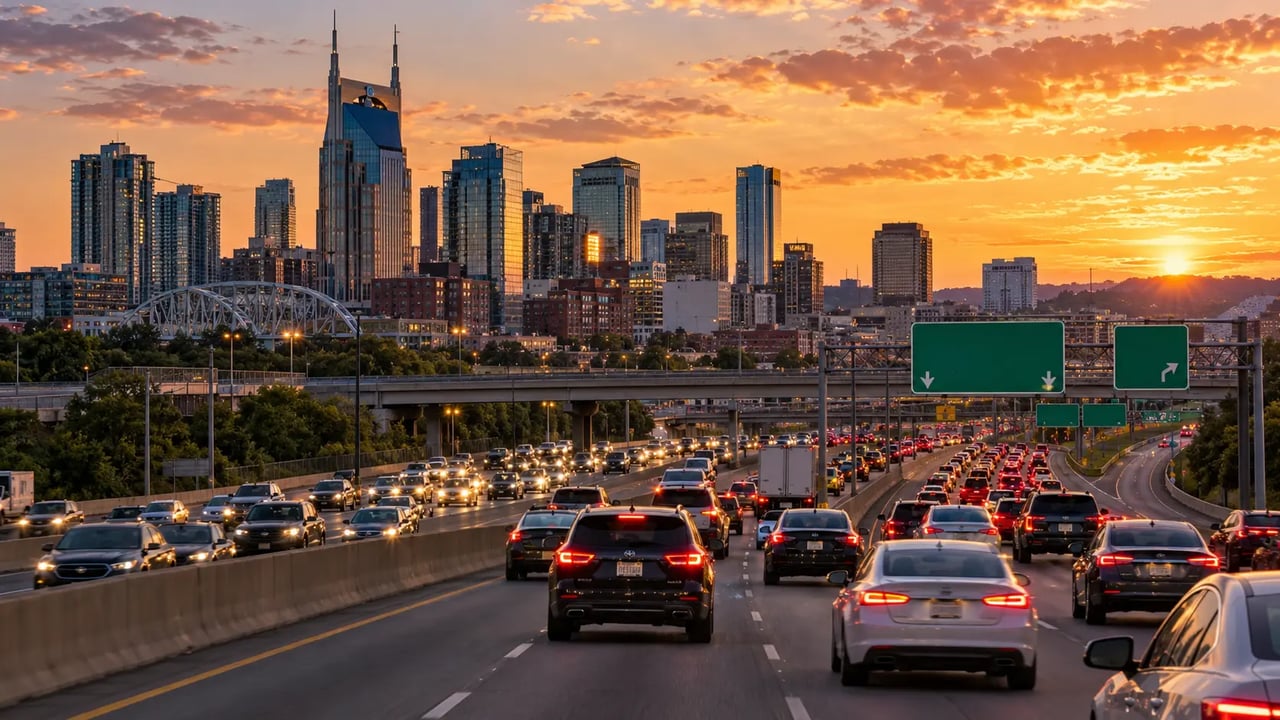
As a practical rule, Nashville drivers should prepare for heavier weekday traffic roughly between 6:30 a.m. and 9:00 a.m. in the morning and 3:30 p.m. to 6:30 p.m. in the afternoon. These are useful planning windows rather than official citywide rush-hour definitions because congestion varies substantially by route and direction.
On I-24, for example, recent Tennessee Department of Transportation traffic analysis identified 7:00–8:00 a.m. as a key westbound morning peak toward Nashville and 4:00–5:00 p.m. as a key eastbound afternoon peak. Congestion can extend for several hours around those peak periods.
Whether you are commuting to work, visiting downtown Nashville, heading to Nashville International Airport, or simply passing through Middle Tennessee, understanding when and where traffic builds can help you plan a smoother trip.
What Time Is Rush Hour in Nashville?
Nashville rush hour generally occurs on weekday mornings as commuters travel toward central employment areas and weekday afternoons as they head back toward surrounding communities.
For trip-planning purposes, expect the busiest conditions around:
- Morning rush hour: approximately 6:30 a.m.–9:00 a.m.
- Evening rush hour: approximately 3:30 p.m.–6:30 p.m.
- Typical peak periods: often around 7:00–8:00 a.m. and 4:00–5:00 p.m. on major commuter corridors
The exact worst period depends on where you are coming from, where you are going, crashes, weather, construction, school traffic, and special events.
Nashville Morning Rush Hour
Morning congestion tends to build as commuters travel toward downtown Nashville and other major employment centers.
One of the clearest examples is I-24 westbound southeast of Nashville. TDOT's January 2026 analysis found substantial morning congestion between the Smyrna area and Briley Parkway, with bottlenecks near major interchanges such as I-440 and I-40. Average travel times on the studied I-24 segment rose beginning around 5:00 a.m., with the longest average travel time occurring around 8:00 a.m.
That means drivers traveling toward Nashville from areas such as Smyrna or Murfreesboro should pay especially close attention to departure time.
Nashville Evening Rush Hour
Afternoon traffic reverses many of the morning patterns.
On I-24, eastbound congestion becomes heavier as commuters leave Nashville. TDOT identified 4:00–5:00 p.m. as a major afternoon peak period, particularly between I-40 and Briley Parkway.
Traffic may begin building before the traditional 5:00 p.m. workday ends, so waiting until 5:00 p.m. to leave downtown does not necessarily help you avoid rush hour.
When Is Nashville Traffic the Worst?
Nashville traffic is often most difficult during weekday morning and afternoon commuting periods, but rush hour is only part of the picture.
Traffic can become particularly unpredictable when several factors overlap, such as:
- A weekday commute
- A crash on an interstate
- Rain or severe weather
- Construction or lane closures
- A major downtown concert
- A Titans or Predators game
- A festival or convention
- Heavy airport travel
- Holiday traffic
Friday afternoons can also become busy earlier than commuters expect because normal work traffic combines with weekend travelers, tourists, and people heading downtown.
In Nashville, asking “When is rush hour?” is helpful, but asking “What is happening in Nashville when I plan to drive?” can be even more important.
Which Nashville Highways Have the Most Rush-Hour Traffic?
Several interstate corridors carry large volumes of Nashville commuter traffic. Understanding how each one functions can make route planning easier.
I-24 Traffic
I-24 is one of Nashville's most important commuter corridors, particularly for drivers traveling between Nashville and communities southeast of the city.
Morning traffic is frequently heavier westbound toward Nashville, while afternoon congestion often becomes more noticeable eastbound away from Nashville.
TDOT's recent corridor analysis specifically identified recurring congestion associated with high traffic volumes, ramp demand, lane changing, and major interchanges around I-440 and I-40.
If your Nashville commute involves I-24, leaving before the busiest part of rush hour can make a substantial difference.
I-40 Traffic
I-40 carries both local Nashville traffic and long-distance travelers moving east and west through Tennessee.
It also serves important connections to:
- Downtown Nashville
- Nashville International Airport
- I-24
- I-65
- I-440
- Donelson and surrounding areas
Because I-40 handles commuter, airport, freight, visitor, and through traffic simultaneously, conditions can change quickly.
Drivers approaching Nashville International Airport should pay particular attention to current traffic patterns because airport roadway construction and access changes continue as part of BNA's expansion program.
I-65 Traffic
I-65 is Nashville's major north-south interstate corridor.
It carries commuters entering Nashville from both the north and south and connects with other heavily traveled highways near the city center. That combination can make merging areas and interstate junctions especially sensitive to crashes or unusually high traffic volumes.
If you are using I-65 during the morning or afternoon commute, build additional time into your trip rather than assuming normal highway speeds.
I-440 Traffic
I-440 can help drivers move between Nashville's major interstate corridors without traveling directly through every part of downtown.
However, it is not automatically a traffic-free alternative.
Because I-440 connects with I-40, I-65, and I-24, congestion near those connections can affect traffic on the loop itself. A navigation app showing live conditions is usually more useful than automatically assuming I-440 will save time.
Briley Parkway and I-840
Briley Parkway and I-840 can sometimes provide alternatives depending on your origin and destination.
I-840 is particularly useful for certain trips that do not require entering central Nashville. However, taking a much longer bypass solely to avoid downtown traffic does not always save time.
Compare estimated arrival times before committing to an alternate route.
Why Does Nashville Have So Much Traffic?
There is no single reason Nashville experiences congestion.
The city's traffic reflects a combination of regional growth, commuting patterns, interstate design, tourism, airport activity, construction, and special events.
One particularly important area is the interstate system around downtown Nashville, where I-24, I-40, and I-65 interact. TDOT describes this network of system interchanges as Nashville's “Inner Loop,” and its traffic analysis notes that high volumes and operational constraints there contribute to congestion that can affect surrounding corridors.
Other factors include frequent merging, lane changes near major interchanges, crashes, disabled vehicles, work zones, and large numbers of drivers entering or leaving downtown at similar times.
What Are the Best Times to Drive Through Nashville?
If your schedule is flexible, the easiest way to avoid Nashville rush hour is to travel outside the main commuting windows.
Generally, better opportunities include:
- Early morning before commuter traffic builds
- Late morning after the morning rush
- Early afternoon before evening traffic increases
- Later evening after commuter congestion declines
For many travelers, midmorning through early afternoon can be easier than driving during the morning or evening peak.
However, there is no universally perfect time. A midday crash, major event, construction project, or airport surge can create unexpected congestion.
Always check current traffic conditions shortly before departure.
What Is the Best Time to Drive Through Nashville on I-24, I-40, or I-65?
Here is a simple planning guide:
Route | Main Traffic Concern | When Extra Time May Be Needed |
|---|---|---|
I-24 | Heavy commuter traffic and major interchange bottlenecks | Morning inbound and afternoon outbound periods |
I-40 | Downtown, airport, commuter and through traffic | Morning/evening rush and major travel periods |
I-65 | North-south commuter traffic | Morning and evening commute |
I-440 | Interstate merging and connecting traffic | Peak commuting periods |
Briley Parkway | Airport, local and cross-town traffic | Rush periods and major events |
I-840 | Longer-distance bypass traffic | Holiday and regional travel periods |
The most reliable strategy is to compare live travel times shortly before leaving.
How Bad Is Downtown Nashville Traffic?
Downtown Nashville traffic follows a different rhythm from traditional suburban commuting.
Rush hour matters, but downtown can also become congested:
- Before and after concerts
- Before and after sporting events
- During conventions
- On busy weekend nights
- During festivals
- When streets close for special events
- When pedestrian activity increases around entertainment districts
Metro Nashville requires permits for events that close streets or restrict access to public areas, so major events can temporarily change normal traffic patterns. The city also maintains information on active street, lane, sidewalk, construction, and special-event closures.
If you are going downtown, check both traffic conditions and event schedules.
How Do Nashville Events Affect Traffic?
Nashville is an entertainment destination, so traffic does not disappear when the weekday commute ends.
Large concerts, professional sporting events, festivals, races, parades, and conventions can produce heavy localized congestion.
The most difficult period may occur after an event, when thousands of people attempt to leave the same area simultaneously.
Event-related road closures can also push traffic onto surrounding streets. Metro Nashville publishes road-closure information, including special-event and construction reports, which can be useful before a major downtown trip.
If you are attending an event, consider arriving early rather than trying to reach downtown immediately before it begins.
Nashville Airport Traffic: What Drivers Should Know About BNA
Nashville International Airport is closely connected to I-40, making interstate traffic an important part of airport trip planning.
BNA is also undergoing substantial expansion. Its New Horizon program includes major terminal and roadway improvements intended to increase capacity and improve traffic flow.
As of October 2026, drivers should also be aware of changing parking and roadway configurations. Economy Lot B access shifted to Terminal Drive in September, rental-car and valet exit traffic began using a new signalized intersection on September 30, and additional Terminal Garage access changes were announced for October 20.
That makes it especially important to follow current airport signage rather than relying solely on an old routine.
How Early Should You Leave for Nashville International Airport?
When heading to BNA, separate two questions:
How early should I arrive at the airport?
and
How much driving time should I allow to reach the airport?
Your airline's recommended arrival time is only part of the equation. You should also account for:
- Nashville rush hour
- I-40 traffic
- Road construction
- Airport roadway changes
- Parking
- Rental-car returns
- Terminal traffic
- Holiday travel
- Weather
If your flight requires you to drive during Nashville's morning or evening rush hour, add a comfortable transportation buffer instead of depending on a perfect travel-time estimate.
How to Avoid Nashville Rush-Hour Traffic
You may not be able to eliminate Nashville traffic, but you can reduce your chances of getting caught in the worst of it.
Check Traffic Before Leaving
Conditions can change rapidly.
Check live traffic immediately before leaving rather than relying on what traffic usually looks like at that time.
Metro Nashville directs drivers to TDOT SmartWay for real-time highway traffic information and also publishes local road-closure information.
Adjust Your Departure Time
Sometimes moving your departure by 20 or 30 minutes can make a meaningful difference.
If you routinely encounter severe congestion at the same time, test earlier and later departure times and compare total travel time.
Compare Multiple Routes
Do not automatically drive the same route every day.
Compare your primary route with:
- I-440
- Briley Parkway
- I-840
- Appropriate surface streets
- Other interstate combinations
The best alternative today may not be the best alternative tomorrow.
Avoid Unnecessary Downtown Travel
If your destination does not require entering downtown Nashville, check whether a bypass route can keep you away from the city's busiest interchanges.
This is particularly useful for travelers passing through Nashville rather than stopping downtown.
Plan Around Nashville Events
A route that works perfectly during an ordinary weekday may become extremely slow during a major concert, game, festival, or downtown street closure.
Check what is happening near your destination before leaving.
Are Nashville Back Roads Faster During Rush Hour?
Sometimes—but not always.
A surface-street route may look appealing when an interstate turns red on your navigation map, but back roads come with their own delays:
- Traffic lights
- School zones
- Pedestrian crossings
- Construction
- Local congestion
- Railroad crossings
- Lower speed limits
- Other drivers taking the same shortcut
A longer interstate route with steady movement can occasionally be faster than a shorter surface route filled with traffic lights.
Use the estimated arrival time, not simply mileage, when comparing alternatives.
Tips for Tourists Driving in Nashville
Driving in an unfamiliar city is always easier when you know what to expect.
If you are visiting Nashville:
Know Where You Are Parking Before You Arrive
Searching for parking while circling downtown adds unnecessary stress and traffic exposure.
Allow More Time Than the Mileage Suggests
A destination that is only a few miles away can take considerably longer during congestion.
Watch Interstate Signs Early
Nashville's interstate system includes several major merges and closely spaced exits. Move into the correct lane with plenty of time rather than making a last-second maneuver.
Expect Downtown Pedestrian Traffic
Areas near Broadway and major entertainment districts can have substantial pedestrian activity, especially evenings and weekends.
Check Events Before Driving Downtown
A major concert, sporting event, convention, or festival can completely change normal traffic conditions.
Tips for Nashville Commuters
Regular commuters can often improve their daily drive by treating traffic as a pattern rather than a surprise.
Track:
- Which days are consistently worst
- Where congestion begins
- Which exits back up first
- Whether leaving earlier actually saves time
- Which alternate routes are reliable
- Which routes become problematic during rain
- When schools and major employers create additional traffic
Over time, you may discover that a small schedule adjustment is more effective than searching for a completely different route.
Nashville Traffic During Weekends
Weekend Nashville traffic differs from weekday rush hour.
You may see less traditional commuter congestion, but entertainment and tourism traffic can increase substantially around:
- Downtown Nashville
- Broadway
- Major music venues
- Sporting venues
- Hotels
- Convention areas
- Shopping districts
- BNA
Saturday evening downtown traffic can be busy even though there is no traditional weekday commute.
Sunday conditions also vary depending on concerts, sporting events, holiday travel, and other activities.
Nashville Traffic During Holidays and Major Travel Weekends
Holiday traffic can create congestion at times when Nashville roads are normally easier to navigate.
Expect possible increases around:
- I-40
- I-24
- I-65
- BNA
- Major shopping areas
- Downtown
- Interstate approaches to Nashville
Airport trips deserve particular attention during major travel periods because traffic, parking demand, and terminal access can all add time to the journey.
If you have an important reservation or flight, avoid planning around the absolute minimum possible travel time.
What Should You Do If You Get Stuck in Nashville Traffic?
If you find yourself sitting in Nashville congestion, avoid constantly changing routes simply because another road briefly appears faster.
Instead:
- Allow your navigation system to recalculate
- Compare the actual time savings before exiting
- Avoid unsafe last-second lane changes
- Leave adequate space between vehicles
- Watch for stopped traffic ahead
- Update anyone expecting you when it is safe to do so
A five-minute theoretical shortcut is rarely worth an unsafe maneuver.
Final Thoughts: Planning Around Nashville Rush Hour
So, what time is rush hour in Nashville?
For practical trip planning, expect heavier weekday traffic around 6:30–9:00 a.m. and 3:30–6:30 p.m., with the most difficult period depending on your route and direction.
Recent TDOT analysis of I-24 reinforces how directional Nashville traffic can be: westbound congestion toward Nashville is prominent during the morning commute, while eastbound congestion becomes heavier during the afternoon commute.
But Nashville traffic is not controlled by the clock alone.
Construction, crashes, weather, airport activity, sporting events, concerts, downtown street closures, and interstate bottlenecks can all change travel conditions within minutes.
The simplest strategy is also the most effective: check live traffic before leaving, allow extra time during peak periods, and have an alternate route in mind.
Frequently Asked Questions About Nashville Traffic
What time does morning rush hour start in Nashville?
Morning commuter traffic can begin building by approximately 6:30 a.m., although conditions vary by route. On the I-24 corridor southeast of Nashville, recent TDOT analysis showed rising travel times beginning earlier in the morning and a major peak around 7:00–8:00 a.m.
What time does evening rush hour start in Nashville?
Drivers should generally prepare for increased afternoon traffic beginning around 3:30 p.m., with heavy conditions often continuing into the early evening. TDOT identified 4:00–5:00 p.m. as an important I-24 eastbound peak period.
What time is Nashville traffic the worst?
The worst times depend on the corridor, but weekday morning and afternoon commute periods are generally the most vulnerable to recurring congestion. Crashes, construction, weather, airport demand, and special events can create severe delays outside those periods.
What is the best time to drive through Nashville?
When possible, consider traveling after the morning rush and before afternoon congestion begins. Midmorning through early afternoon can often provide better conditions, although live traffic should always be checked.
Is I-24 always congested in Nashville?
No. However, I-24 experiences significant recurring commuter congestion, especially westbound toward Nashville during the morning and eastbound during the afternoon.
Is I-40 busy through Nashville?
It can be. I-40 carries local commuters, airport travelers, freight traffic, tourists, and interstate travelers, making conditions highly variable.
How bad is I-65 traffic in Nashville?
I-65 can become heavily traveled during weekday commuting periods, particularly near Nashville's central interstate connections. Crashes or merging problems can quickly create additional delays.
Is Nashville traffic worse than Atlanta traffic?
Traffic severity depends on the route, time, incident conditions, and distance traveled. Rather than assuming one city is always worse, drivers should compare current conditions for the specific trip they are planning.
How long does it take to drive through Nashville during rush hour?
There is no single reliable number. Travel time depends heavily on the direction and interstate involved. On one I-24 corridor studied by TDOT, average westbound travel times increased substantially during the morning peak compared with overnight conditions.
Is Nashville traffic bad on weekends?
Weekend traffic can still become heavy, especially around downtown entertainment areas, sporting events, concerts, festivals, the airport, and major travel weekends.
How can I avoid downtown Nashville traffic?
If downtown is not your destination, compare routes using I-440, Briley Parkway, I-840, or other appropriate corridors. Always compare live estimated travel times before choosing a bypass.
Does Nashville airport traffic get bad during rush hour?
It can. BNA traffic interacts with I-40 commuter traffic, and ongoing airport roadway and parking projects may also affect how drivers enter and exit airport facilities.
What apps are best for checking Nashville traffic?
Drivers can use mainstream navigation services with live traffic data, while TDOT SmartWay provides real-time information for Tennessee highways. Metro Nashville also provides information about active local roadway closures.
Should I take I-840 to avoid Nashville traffic?
I-840 can make sense for some trips that do not require entering central Nashville, but it is not automatically faster. Compare total travel time and distance before choosing the bypass.